You’ve spent six months recommending AAC devices — that’s augmentative and alternative communication technology, meaning everything from low-tech picture boards to high-end speech-generating devices like the Tobii Dynavox I-Series — and you’re starting to notice the gap between “I know how this device works” and “I understand why this person communicates the way they do.” That gap is where professional reference books live. They won’t tell you which button layout to set up in Snap Core First. What they will do is sharpen the clinical reasoning that makes every feature-level decision more defensible, more personalized, and more durable across the funding cycles you’re navigating.
This article is a practitioner’s reading guide — not a comprehensive bibliography. The goal is to tell you which texts are actually load-bearing for a clinician with somewhere between six months and two years in the AAC space, what each one does well, and when it’s the wrong tool for the question you’re trying to answer. Because the wrong reference book at the wrong moment is just an expensive paperweight.
The Foundational Text You Probably Own But Haven’t Finished
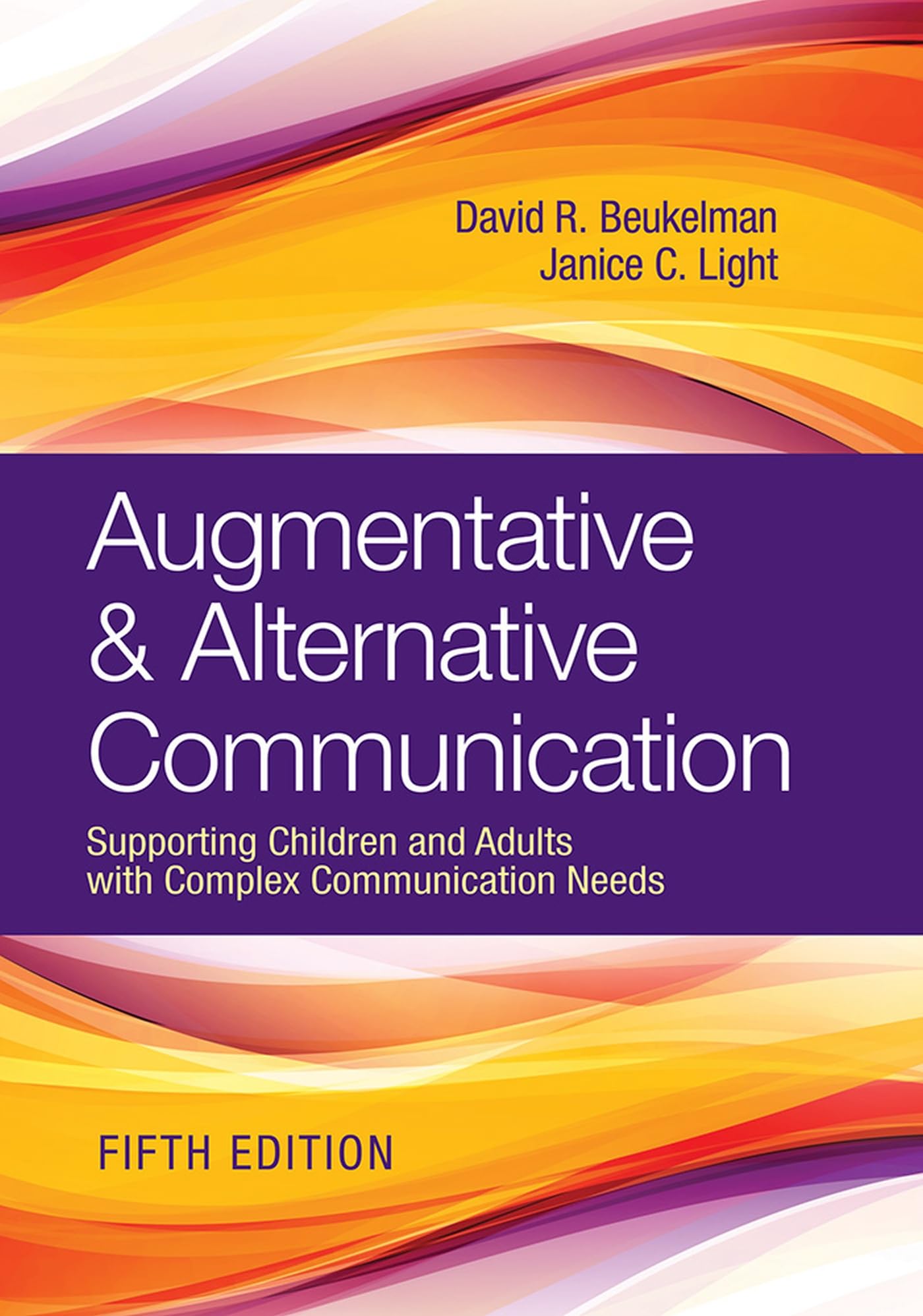
Beukelman & Mirenda — Augmentative and Alternative Communication (4th ed., Paul H. Brookes Publishing)
This is the field’s de facto reference standard. If you work in AAC at any level, you’ve heard it cited. The question practitioners at your stage should be asking isn’t “should I own it?” — you probably already do — but “which sections am I actually using versus which ones I skimmed during grad school?”
The honest assessment: Chapters 4 through 7, covering participation models and feature matching frameworks, are genuinely evergreen. The Participation Model described in this text — a structured process for identifying what’s blocking someone’s communication and matching the intervention to the real barrier rather than the diagnosis — remains the most defensible assessment framework when you’re writing a funding justification for a $3,500+ device. Funding reviewers at Medicaid and private insurers have seen enough “client would benefit from AAC” letters. What moves an authorization is a documented gap analysis that traces a specific communicative need to a specific device feature, and Beukelman & Mirenda gives you the vocabulary and the scaffolding to do that.
Where it shows its age: the technology chapters. The 4th edition was published in 2013, which predates robust robust cloud-based AAC vocabulary systems, eye-gaze improvements that have made devices like the Tobii Dynavox I-Series viable for earlier ALS intervention, and the current generation of symbol-based robust vocabulary programs. Read those technology sections as historical context and supplement with current vendor documentation.
The decision rule: If you’re writing a funding letter or building an assessment report, you want this book open. If you’re troubleshooting a vocabulary layout, close it and go to the device documentation.
The Research Base You’re Citing Without Reading Directly
Light & McNaughton’s Communicative Competence Framework — Published Across Multiple Journal Sources
Janice Light’s communicative competence model — the idea that successful AAC use requires operational, linguistic, social, and strategic skills, not just device access — is cited constantly in AAC literature and ASHA guidance. Per ASHA’s Practice Portal on Augmentative and Alternative Communication, this framework underpins current service delivery standards. But most practitioners encounter it secondhand, through textbook summaries or slide decks.
The original 1989 paper (Light, published in Augmentative and Alternative Communication) and the 2014 update co-authored with McNaughton are short enough to read in a single sitting and dense enough to change how you write goals. The updated 2014 article — “Communicative Competence for Individuals who require Augmentative and Alternative Communication,” published in Augmentative and Alternative Communication — is particularly useful because it addresses participation in digitally mediated communication, which matters when you’re advising a client whose primary communication environment is a classroom iPad or a workplace Zoom call.
The decision rule: If you’re writing IEP goals or long-term outcomes and finding your language vague (“will improve communication”), reading the Light & McNaughton framework directly — not summarized — will tighten your goal-writing within one session.
A Numeric Reality Check
By the numbers — why your reference library pays off at scale:
- A denied AAC funding authorization and resubmission cycle costs an SLP or AT team an estimated 4–8 additional clinical hours per case (per ATIA 2024 conference proceedings on AT outcomes documentation).
- A single successful authorization for a mid-range SGD ($1,200–$2,500 range) represents 2–4x the cover price of a complete AAC reference library.
- Practitioners who can cite a named assessment framework in funding letters report fewer initial denials — a pattern documented in ATIA’s evidence-based practice guidance.
The Specialist Texts That Earn Their Shelf Space
Ganz — AAC Interventions for Individuals with Autism Spectrum Disorders (Plural Publishing, 2015)
Jennifer Ganz’s text is narrower in scope than Beukelman & Mirenda, and that’s exactly the point. If a meaningful percentage of your caseload includes autistic individuals — which, given current prevalence data, is likely true for most school-based practitioners — this text provides intervention frameworks you won’t find in the generalist references.
What’s useful here: the structured comparison of aided AAC (symbol-based systems, SGDs) versus unaided AAC (sign-based systems) in autism-specific contexts, with explicit discussion of evidence quality for each approach. For practitioners working with clients or families who are weighing low-tech PECS-style systems against entry-level SGDs in the $150–$600 range, Ganz gives you a framework for that conversation that isn’t just “here’s what the research shows in aggregate.” It shows the conditions under which different approaches have and haven’t transferred to spontaneous communication.
Where it’s limited: it’s not a funding or policy resource, and the device landscape it describes has evolved. Treat it as an intervention reasoning resource, not a product guide.
Drager, Light & McNaughton Research Corpus — Journal-Based, Not a Single Volume
This isn’t one book but a cluster of research that practitioners regularly misattribute or cite without reading. The 2010 Drager, Light & McNaughton study on AAC interventions for young children with complex communication needs, published in the Journal of Pediatric Rehabilitation Medicine, is among the most-cited papers in early AAC intervention and directly relevant if you’re working with pre-K or early elementary populations. The key contribution: explicit documentation of what language and communication gains look like with AAC support over time, which matters enormously when you’re building a case for early device funding against a “wait and see” recommendation from another provider.
The decision rule: If a team meeting or IEP includes debate about whether a young child is “ready” for an AAC device — a framing that ASHA’s Practice Portal explicitly cautions against — this research is your counter-evidence. Know it well enough to cite it from memory.
What’s Missing From the Standard Reading List
The books above will give you assessment frameworks, intervention evidence, and goal-writing structure. What the standard AAC reference library underserves:
Funding pathway mechanics. None of these texts will walk you through a Medicaid prior authorization workflow, help you navigate the difference between DME (durable medical equipment) billing and educational service billing for the same device, or explain how to document medical necessity in a way that maps to a specific payer’s criteria. For that, ASHA’s Practice Portal guidance on AAC funding documentation and ATIA’s published resources on funding pathways are more current and more actionable than any textbook. Check ASHA’s online Practice Portal directly — that guidance is updated more frequently than any print reference.
Device-specific implementation. Reference books describe frameworks. Device manufacturers’ clinical consultants, their published vocabulary research (Tobii Dynavox and PRC-Saltillo both publish white papers and clinical guides on their respective vocabulary systems), and training certifications are where implementation knowledge actually lives. The books are for the reasoning layer underneath the device decisions.
Pediatric versus adult AAC divergence. Most foundational texts blend pediatric and adult populations in ways that can mislead. ALS-specific AAC intervention — where you’re often working against a deteriorating motor profile and need to plan for device access changes before they happen — has a different clinical logic than autism-related AAC intervention. If your caseload skews heavily toward one population, look for population-specific resources. ASHA’s Practice Portal includes population-specific AAC guidance pages that practitioners at your stage often underuse.
Building a Reference Stack That Earns Its Weight
The libraries that gather dust tend to be collections of general-purpose volumes. The libraries that get used tend to be short and purpose-organized — two or three books that match the practitioner’s actual caseload, plus bookmarked journal access for the specific research papers that underpin the frameworks.
A practical mid-2026 stack for a school-based or early-career clinical practitioner:
- Beukelman & Mirenda (4th ed.) — assessment and funding-letter writing reference. Worth the investment; used copies circulate and retain most of the clinical value since the framework chapters haven’t changed.
- Light & McNaughton 2014 journal article — print and annotate this. It’s free to access through most university library systems and many hospital credentialing libraries.
- Ganz (2015) — if autism is a significant share of your caseload. Otherwise, defer.
- ASHA Practice Portal AAC pages — not a book, but treat it as a living reference. Bookmark the funding documentation guidance and the evidence maps.
The goal isn’t a comprehensive library. The goal is a short stack you actually reach for when a funding authorization stalls, a team disputes whether a client is “ready,” or you’re writing goals and the language keeps going vague on you. That’s when the right reference — read, not just owned — pays for itself.
If you have one afternoon: Read the Light & McNaughton 2014 article and skim Beukelman & Mirenda chapters 4–6. You’ll leave with tighter goal language and a cleaner framework for your next funding letter.
If you have a week and a complicated caseload: Add the Ganz text if autism features heavily, and spend time with ASHA’s Practice Portal funding guidance. The combination covers assessment logic, intervention evidence, and documentation mechanics — which is most of what actually gets stuck in clinical practice at your stage.