Here is a situation that probably sounds familiar if you work in this space: a client comes in proud — they did their research, spent $4,000 on premium hearing aids, and still finds that a $350 device called the Pocketalker Ultra (a personal sound amplifier, meaning a device that makes sounds louder without being regulated as a medical hearing aid) outperforms their audiologist-fitted technology in the one situation that matters most to them: dinner-table conversation. Owners of premium hearing aids have documented exactly this scenario in aggregated purchasing reviews, citing less distortion and cleaner pickup of nearby voices with the Pocketalker than with their prescription-grade aids.
That is not a knock on premium hearing aids. It is a case study in feature mismatch — and it is the clearest possible argument for why the OTC hearing aid vs. amplifier vs. Pocketalker decision deserves more than a shrug and a “go see an audiologist.” This article breaks down the three device categories, names the real trade-offs, tracks live market risks where they exist, and ends with unambiguous decision rules.
The Regulatory Distinction That Actually Matters to Buyers
In October 2022, the FDA (Food and Drug Administration, the U.S. agency that regulates medical devices) created a new legal category: over-the-counter (OTC) hearing aids. These are self-fitting devices for adults 18 and older with perceived mild-to-moderate hearing loss — no audiologist visit, no prescription required. They are regulated medical devices, held to standards for output limits, labeling, and safety.
Personal sound amplifiers (PSAPs) — the category that includes the Pocketalker and a large swath of sub-$100 products — are explicitly not medical devices under FDA rules. They are intended for people with normal hearing in situations that benefit from amplification: birdwatching, hunting, classroom listening, large-room conversation. They are not FDA-cleared to treat hearing loss, and they cannot be marketed that way.
The American Speech-Language-Hearing Association, in its published overview “Over-the-Counter Hearing Aids” (asha.org, 2023), and the FDA’s 2022 guidance document “Regulatory Requirements for Hearing Aid Devices and Personal Sound Amplification Products” together define the practical split:
| Feature | OTC Hearing Aid | PSAP (e.g., Pocketalker) |
|---|---|---|
| FDA classification | Class II medical device | Consumer electronic |
| Target user | Mild-to-moderate hearing loss | Normal hearing, difficult listening environments |
| Self-fitting allowed | Yes | N/A — no fitting required |
| Digital signal processing | Yes (frequency shaping, compression, noise reduction) | Minimal or none |
| Price range (2026) | ~$200–$1,600/pair | ~$70–$400 |
The cheap no-name OTC products at the bottom of the price range are where this distinction collapses in practice. Aggregated owner reviews document buyers who identified a budget device as “just an amplifier” despite its OTC hearing aid labeling, because the device delivered nothing more than undifferentiated volume increase. The OTC label is a regulatory floor, not a performance guarantee.
Three Device Tiers: What You Are Actually Comparing
Addressing the comparison at the level of individual products requires understanding what tier of the market each device occupies. The three tiers below correspond to meaningfully different performance profiles, price points, and appropriate user profiles — not simply to cost.
Budget-Tier: Sub-$100 OTC Aids and Entry PSAPs
Devices in this tier include unbranded or white-label OTC hearing aids sold under $100 and basic PSAPs such as entry-level behind-the-ear amplifiers. Consumer Reports, in its testing overview “OTC Hearing Aids: What Our Tests Found” (consumerreports.org, 2024), found that many devices in this tier deliver amplification that is functionally indistinguishable from a PSAP regardless of their OTC labeling. If a device cannot demonstrate adjustable frequency response, it is functionally a PSAP — which may or may not be what the buyer needs, but they should know what they are buying.
Appropriate for: Situational backup use, television listening, buyers who understand they are purchasing amplification rather than a fitted hearing device.
Not appropriate for: Users with documented hearing loss who need frequency-specific gain, anyone relying on this as a primary hearing intervention.
Audien
$88.00
In stock on Amazon
Check price on AmazonMid-Tier: Self-Fitting OTC Hearing Aids ($200–$600)
This is the segment the FDA’s 2022 OTC rule was primarily designed to serve. Devices here offer genuine digital signal processing, adjustable frequency bands, and — in most cases — either physical controls or a companion app. Wirecutter (New York Times), in its guide “The Best OTC Hearing Aids” (nytimes.com/wirecutter, 2025), identifies this tier as the most consequential for buyers with mild-to-moderate loss who are comfortable with self-fitting.
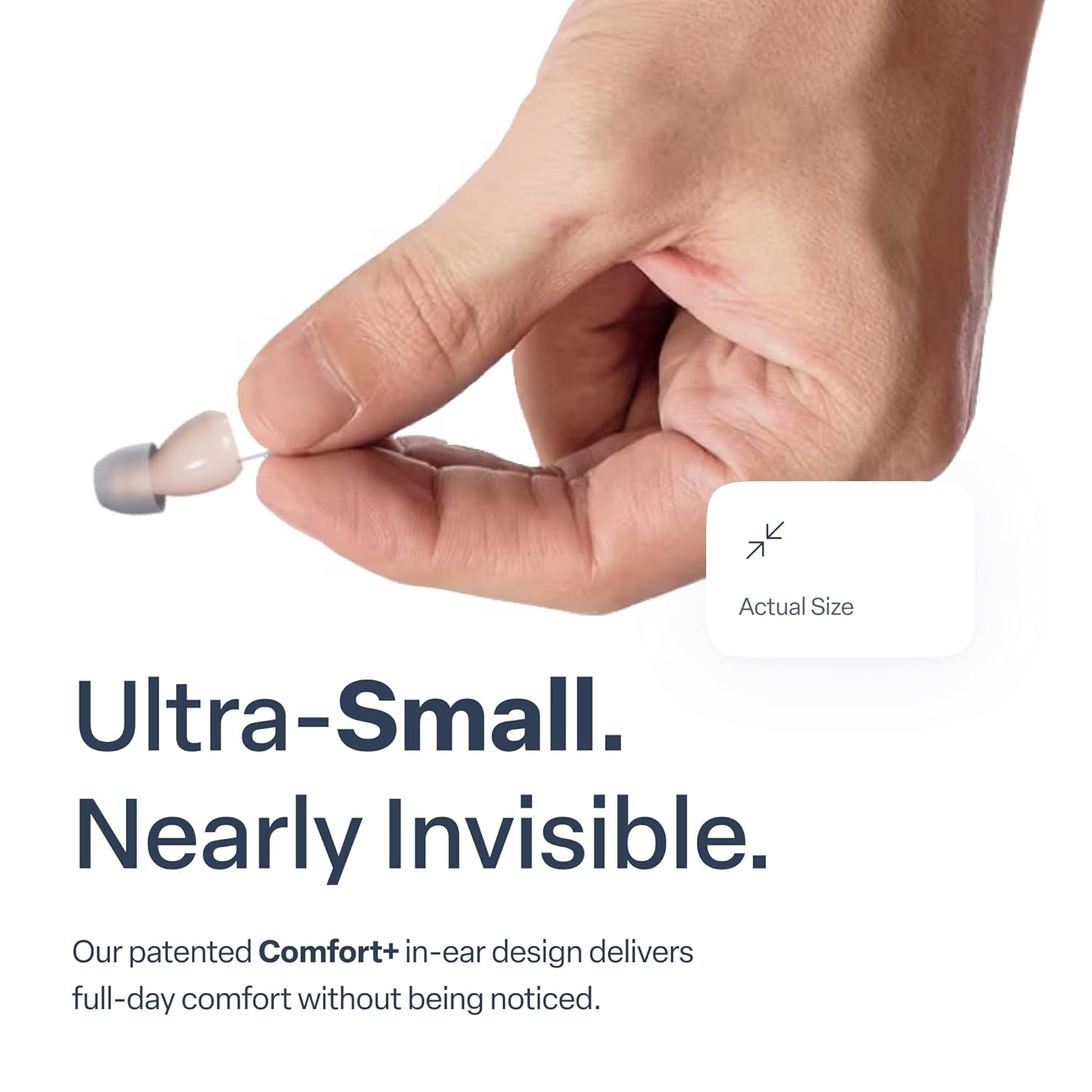
Audien Atom One is the reference point for “works out of the box” at the lower end of this tier. Owners whose prior experience was prescription aids requiring multiple clinic visits for reprogramming consistently cite the Audien’s value proposition as accurate: it is small, rechargeable, and requires no app. The trade-off is no fine-tuning capability beyond factory settings. Reviewers with mild high-frequency loss report strong results; those with more complex or asymmetric loss profiles report disappointment.
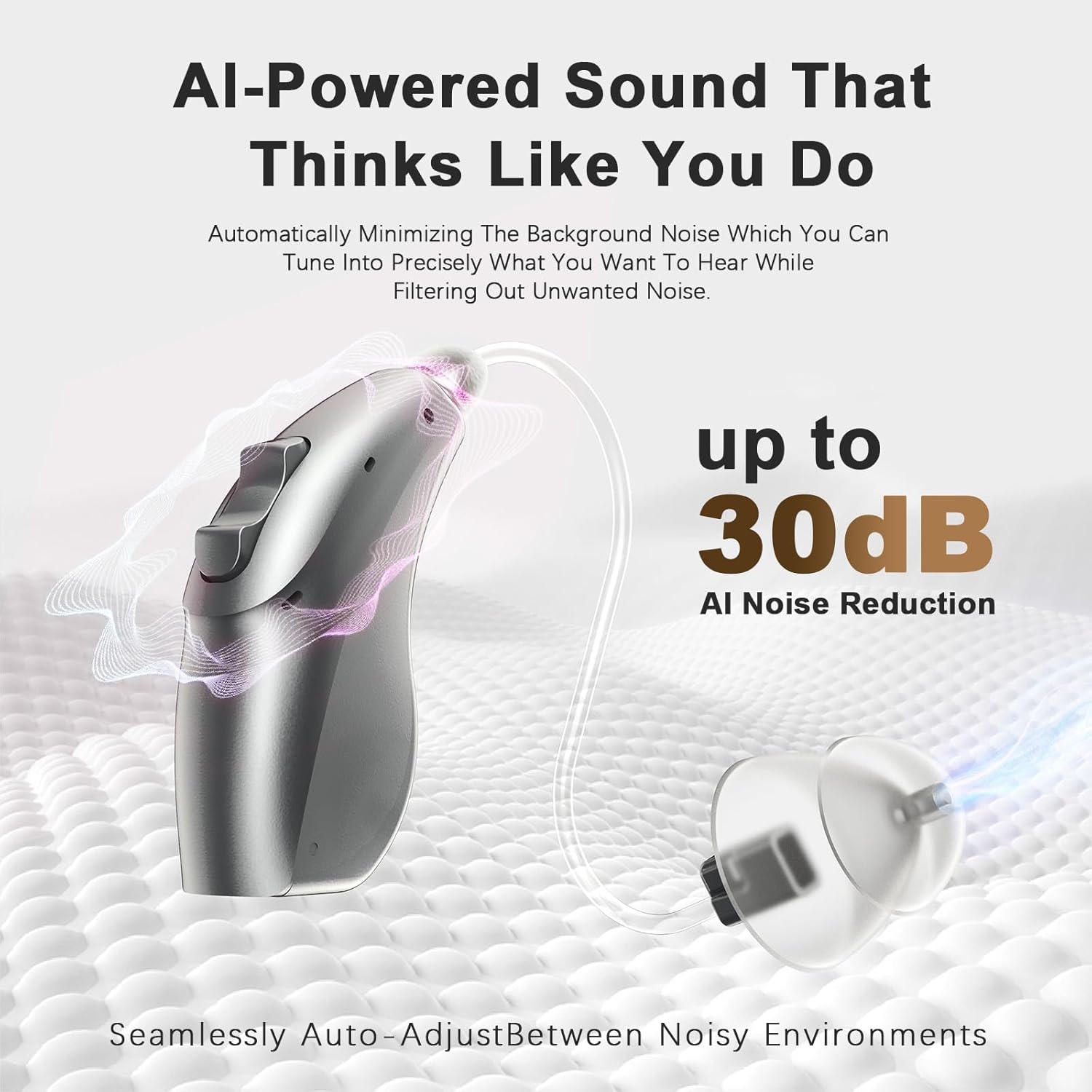
BlaidsX (Bluetooth-enabled OTC) represents the upper end of this tier and carries a documented category risk. A verified purchaser reported Bluetooth pairing on iPhone unreliable enough that they stated they could not use the music streaming or phone call features — the specific functions that differentiated this device from a basic OTC aid. For users drawn to Bluetooth-enabled OTC aids who are not comfortable with smartphones, this is a category risk, not just a product risk. The American Speech-Language-Hearing Association’s OTC overview (asha.org, 2023) notes that self-fitting complexity is a real access barrier for some user groups. Before recommending any app-controlled OTC aid to a client who is not comfortable with smartphones, confirm that the pairing workflow has been independently validated as accessible.
Lexie B3 — Live Purchasing Risk (May 2026): A documented reviewer reported that Lexie was winding down operations and limiting warranty support to 60 days at time of writing. The Hearing Loss Association of America, in its resource “Over-the-Counter Hearing Aids: What You Need to Know” (hearingloss.org, 2023), and Consumer Reports both identify warranty and ongoing manufacturer support as critical OTC evaluation criteria. A 60-day support window on a hearing device is materially below market standard. Before ordering the Lexie B3, verify current company status and warranty terms directly with the manufacturer. If the company has stabilized, this flag should be revisited; if not, this device should be removed from any recommendation shortlist.
Appropriate for: Adults who self-identify mild-to-moderate loss, are comfortable with basic technology, and want a device configured in a day without a clinic visit.
Not appropriate for: Users with significant or asymmetric loss, users for whom app dependency is a barrier, anyone requiring professional fitting.
Williams
$202.00
In stock on Amazon
Check price on AmazonPremium-Tier: Prescription Aids and the Pocketalker as Specialist Supplement
This tier includes audiologist-fitted prescription hearing aids in the $2,000–$7,000 range — devices with multi-band compression, directional microphone arrays, Bluetooth audio streaming, tinnitus masking, and remote programming. They are the correct tool for complex, asymmetric, or moderate-to-severe hearing loss. They are also the devices most likely to be supplemented — not replaced — by the Pocketalker Ultra in specific scenarios.
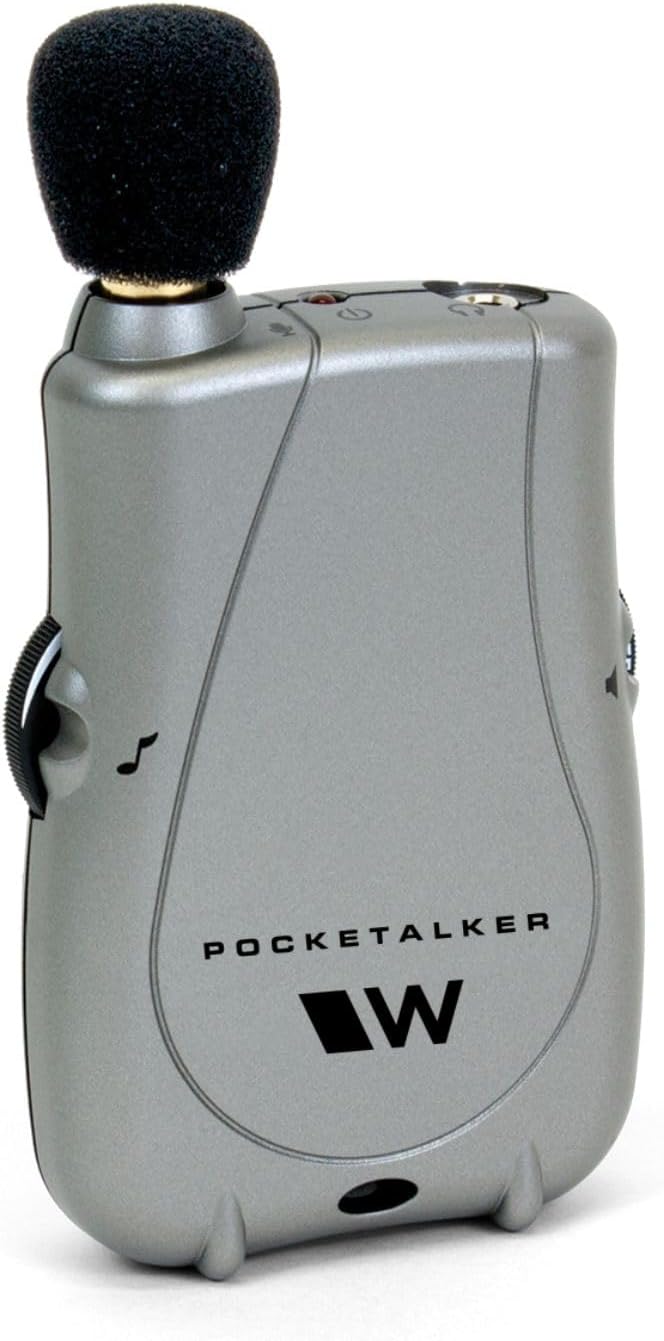
The Pocketalker Ultra is a personal sound amplifier with a decades-long track record in clinical and home settings. It uses a wired lapel or desktop microphone that the user positions physically close to the sound source. No algorithm needs to estimate where the speaker is. The signal path is short and analog-dominant. The result, as owners consistently report across aggregated reviews — including owners of prescription hearing aids — is a clean, low-latency voice signal in exactly the scenario that sophisticated hearing aids can struggle with: close-range, controlled-source conversation at a family dinner table, a clinical consultation, or a patient bedside.
This is not a flaw in premium hearing aids. It is a feature expectation mismatch. Premium hearing aids are optimized for the full acoustic world. The Pocketalker is optimized for one specific scenario, and it wins that scenario on physics: the microphone is there, at the source, rather than behind an ear running noise-cancellation algorithms against a nearby conversational partner.
When the Pocketalker earns its place at this tier:
- One-on-one conversation (clinic, family meal, patient consultation)
- Television listening via direct audio cable
- Users who find earbud-style devices uncomfortable or difficult to manage motorically
- Backup listening when primary aids are being repaired
When the Pocketalker is the wrong tool even at this tier:
- Dynamic environments requiring bilateral spatial awareness (driving, crowded transit, navigation)
- Users needing frequency-specific gain for complex loss profiles
- Anyone whose priority is Bluetooth streaming or app connectivity
Appropriate for: As a primary device for users whose main use case is controlled close-range conversation; as a supplement or backup for premium hearing aid users.
Not appropriate for: Full acoustic world coverage, complex loss, users requiring directional hearing.
BlaidsX
$399.00
In stock on Amazon
Check price on AmazonFrequently Asked Questions
What is the difference between a personal sound amplifier and an OTC hearing aid — does it matter which one I buy?
Yes, it matters, but not always in the direction buyers expect. OTC hearing aids are FDA-regulated medical devices for people with hearing loss; PSAPs are consumer electronics for situational amplification. The practical difference is digital signal processing — OTC aids shape sound by frequency, PSAPs largely do not. If you have documented hearing loss, an OTC hearing aid is the appropriate category. If your primary need is amplifying a specific, controlled sound source, a PSAP like the Pocketalker may actually perform better for that specific use case. The FDA’s 2022 guidance document “Regulatory Requirements for Hearing Aid Devices and Personal Sound Amplification Products” defines this distinction clearly.
Will an OTC hearing aid work for me if I have never been tested by an audiologist?
The FDA designed OTC aids for self-fitting by adults who self-identify as having mild-to-moderate hearing loss. You do not need a prior test. However, Wirecutter (New York Times), “The Best OTC Hearing Aids,” and Consumer Reports, “OTC Hearing Aids: What Our Tests Found,” both note that users with more significant or complex loss profiles — or those whose loss is asymmetric — are more likely to be underserved by self-fitting. A free online hearing screener, available through programs listed by the American Speech-Language-Hearing Association (asha.org), can help calibrate whether OTC is likely to be sufficient before spending $500 or more.
Is the Pocketalker a legitimate hearing device or just a toy amplifier?
It is a legitimate, well-engineered personal sound amplifier. It is not an OTC hearing aid and is not intended to treat hearing loss. Within its design scope — close-range voice amplification via a physically positioned microphone — owners consistently report strong performance, including owners of premium hearing aids who use it as a situational supplement.
What should I do if my hearing aids break on a weekend and I cannot reach my audiologist?
A PSAP like the Pocketalker or a basic OTC aid serves a legitimate bridge role here. The Pocketalker in particular requires no fitting, no charging infrastructure beyond AA batteries, and no app — it operates in under ten seconds. For clinicians advising clients, the Hearing Loss Association of America (hearingloss.org) treats backup device planning as part of standard hearing loss management. This is worth raising proactively, not reactively after a crisis.
Are app-controlled hearing aids too complicated for older adults who are not comfortable with smartphones?
For some users, yes. The BlaidsX pairing issue is the clearest documented example of how app dependency can negate a device’s value proposition entirely. If Bluetooth pairing, app updates, or smartphone navigation are barriers for your client or family member, prioritize devices with physical controls or no-app self-fitting. The Audien Atom One and the Pocketalker both operate without any smartphone dependency. That is not a downgrade — it is the correct feature set for that user profile. The American Speech-Language-Hearing Association’s OTC overview (asha.org, 2023) identifies self-fitting complexity and technology access as real barriers warranting clinical attention.
Decision Rules: If X, Then Y
If the primary use case is one-on-one conversation or TV listening and the user has motor or cognitive complexity: Start with the Pocketalker. It is not a consolation prize — it is the highest-performance tool for that specific scenario, and owners of $4,000 hearing aids have documented this in aggregated reviews.
If the user self-identifies mild-to-moderate loss, is comfortable with basic technology, and wants a device set up in a day: A mid-tier OTC hearing aid with no app dependency is appropriate. The Audien Atom One is the reference point for “works out of the box” in this tier.
If Bluetooth streaming and smartphone integration are priorities: Validate the pairing workflow on the user’s specific device and operating system before purchase. App-controlled OTC aids carry meaningful setup risk for less tech-fluent users, as documented in the BlaidsX purchasing record.
If the Lexie B3 is under consideration: Confirm current warranty and company status directly before ordering. As of May 2026, the documented warranty reduction to 60 days represents a live purchasing risk that changes the value calculation significantly.
If a sub-$100 device labeled “OTC hearing aid” is on the shortlist: Verify it provides adjustable frequency response. If it does not, it is functionally a PSAP — which may or may not be what the buyer needs, but they should know what they are buying before purchase.
If a client already owns prescription hearing aids but needs a backup or travel device: The Pocketalker is the lowest-friction, highest-reliability bridge option. No fitting, no app, no charging cable required beyond standard AA batteries.
The OTC market is real, it is useful, and it is also genuinely confusing — regulatory categories, marketing language, and actual performance do not always align. Matching the device to the situation is the job. The category label is a starting point, not the answer.