Imagine you’ve just watched a parent struggle through Thanksgiving dinner, asking people to repeat themselves, nodding along when they clearly haven’t heard, and finally admitting they “just can’t do the crowds anymore.” You do some research and immediately hit a wall: prescription hearing aids running $3,000 to $7,000 a pair, a six-week wait for an audiologist, and a Medicare coverage landscape that remains stubbornly complicated. Then you notice devices on retail shelves — some under $100, some just under $1,000 — promising similar results. Are they legitimate? Are they the same thing? And how do you know which one matches what’s actually happening with the hearing?
This article answers those questions from the decision-making side. Since the FDA formally established the over-the-counter (OTC) hearing aid category in 2022 — opening retail sales to adults with perceived mild-to-moderate hearing loss, no audiologist required — the market has split into two meaningfully different product types: OTC hearing aids (FDA-regulated medical devices) and personal sound amplification products, or PSAPs (consumer electronics, not regulated as medical devices). That distinction has real consequences for what you can claim, recommend, fund, and return. Here’s how to navigate it.
The Legal and Practical Divide: OTC Hearing Aids vs. PSAPs
The U.S. Food and Drug Administration’s guidance document “Regulatory Requirements for Hearing Aid Devices and Personal Sound Amplification Products: Guidance for Industry and FDA Staff” draws the line clearly: an OTC hearing aid is a Class II medical device, self-fitted by the user, intended for adults 18 and older with mild-to-moderate hearing loss. A PSAP is explicitly not a hearing aid — it’s marketed for people with normal hearing in specific situations such as hunting, birdwatching, or lectures. Legally, PSAPs cannot claim to treat, compensate for, or diagnose hearing loss.
Does that distinction matter in practice? For the person buying off a retail shelf — often no. The American Speech-Language-Hearing Association (ASHA), in its public-facing hearing health guidance at asha.org, has noted that the functional gap between a well-designed PSAP and a basic OTC aid can be smaller than the price gap suggests. But for practitioners and caregivers navigating insurance, Medicaid waiver programs, or school district procurement, the label is load-bearing: only FDA-classified hearing aids qualify for certain reimbursement codes or technology stipends. PSAPs are excluded.
Where PSAPs win: Williams Sound’s PockeTalker line — a wired personal amplifier that costs roughly $150 — continues to generate one of the most striking patterns in aggregated user reviews. Owners repeatedly report that the PockeTalker outperformed prescription aids they had previously owned. Consumer Reports, in its coverage of OTC hearing aids, has noted that simple amplification without digital processing is sometimes exactly what mild high-frequency loss requires, and that added complexity can introduce distortion the user didn’t have before.
Where OTC hearing aids win: Digital signal processing, directional microphones, Bluetooth streaming, and app-based self-fitting are features that PSAPs rarely offer at comparable quality. For someone whose hearing loss varies by environment — quiet conversation versus restaurant background noise — those features are not marketing fluff.
Matching Device Class to Hearing Loss Stage
The framework that most occupational therapists and speech-language pathologists working in adult rehabilitation find useful is a rough three-stage model built on the severity classifications described by the American Speech-Language-Hearing Association in its public hearing loss guidance at asha.org.
Stage 1 — Situational Difficulty, No Audiogram
The person notices problems in specific conditions (group conversation, TV at normal volumes, phone calls in noisy environments) but hasn’t been formally assessed. This is the target population for PSAPs and entry-level OTC aids. Williams Sound’s PockeTalker Ultra and devices in the Audien Atom One tier live here. The core logic: if simple amplification resolves the problem, you’ve solved it cheaply. If it doesn’t, you’ve confirmed the loss is complex enough to warrant formal evaluation — which is also useful information.
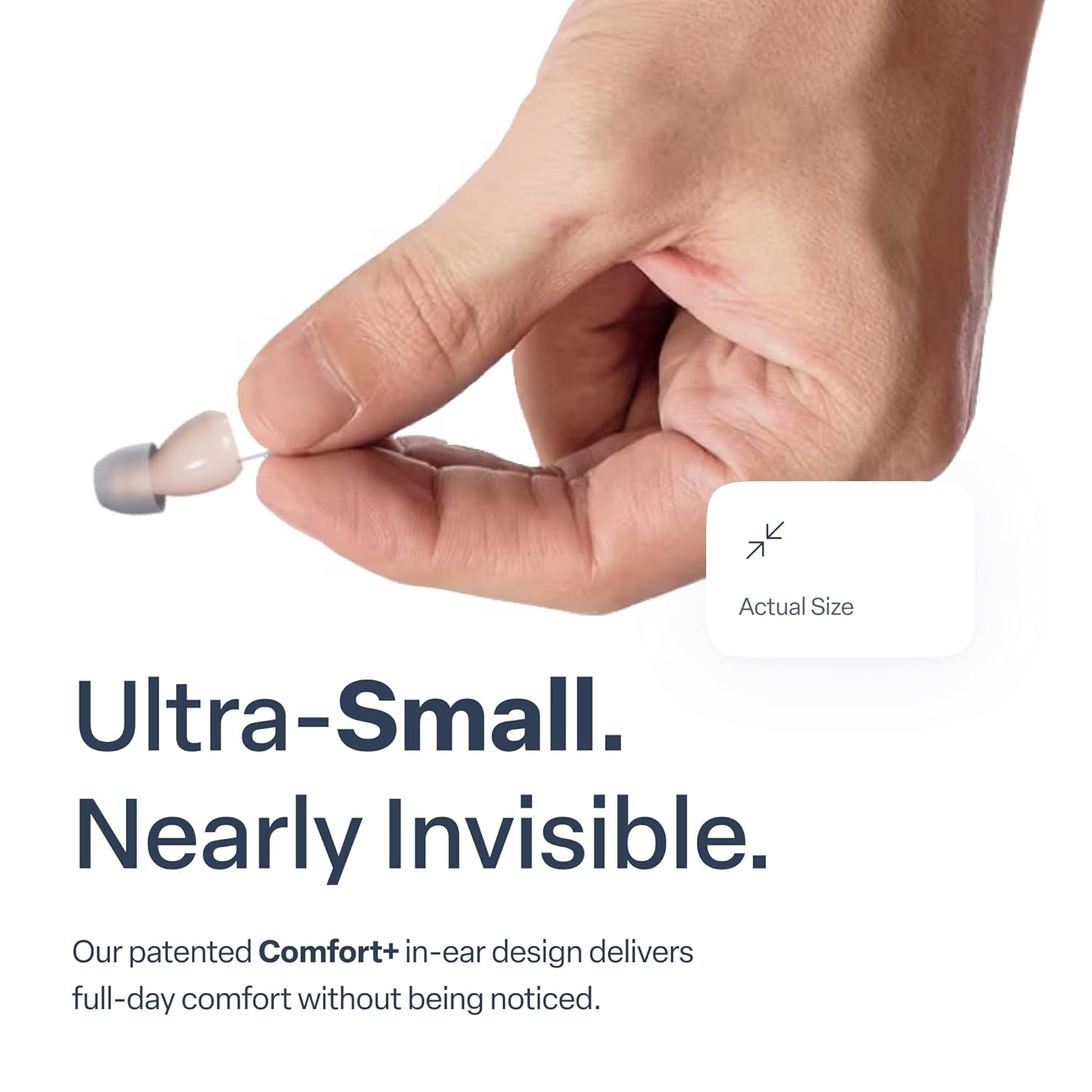
Audien
$88.00
In stock on Amazon
Check price on AmazonStage 2 — Confirmed Mild-to-Moderate Loss (Audiogram Available)
This is the legal sweet spot for OTC hearing aids. The FDA’s OTC category was specifically designed for this group — adults with audiogram-confirmed loss in the mild-to-moderate range (roughly 26–55 dB hearing level, per ASHA’s audiogram severity classifications). Devices like the Lexie B3, developed in partnership with Bose, and the BlaidsX sit here. The Lexie B3’s Bose involvement is substantive: Bose developed an independent hearing aid line (Bose SoundControl, since discontinued) and the signal processing technology developed through that program was licensed by Lexie for the B3 — a genuine engineering collaboration, not a co-branding arrangement. Wirecutter’s OTC hearing aid coverage, published by The New York Times’ product review division, has consistently identified the B3’s support ecosystem — including remote audiologist check-ins via the app — as a meaningful differentiator at its price tier.
BlaidsX surfaces in aggregated owner reviews as a genuine category differentiator: it functions simultaneously as a hearing aid and a Bluetooth earbud, allowing users to take calls or stream audio without removing the device — a feature most prescription aids at two to three times the price do not offer cleanly.
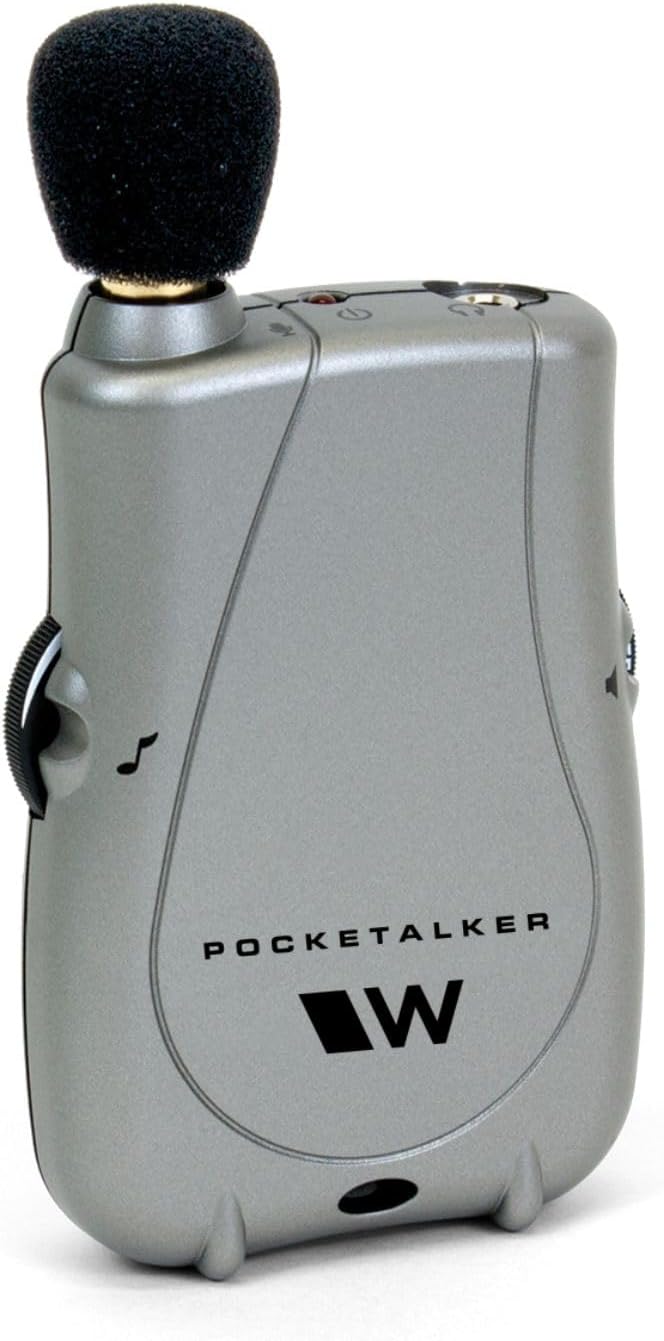
Williams
$202.00
In stock on Amazon
Check price on AmazonStage 3 — Moderate-to-Severe or Complex Loss
This is where OTC aids hit their regulatory ceiling. The FDA explicitly excludes severe-to-profound loss from the OTC category. Sensorineural losses with significant word recognition problems, auditory processing disorders, conductive loss requiring medical evaluation, and pediatric populations all require the prescription pathway. Sending a Stage 3 patient toward an entry-level OTC device is not a neutral recommendation — it delays appropriate care.
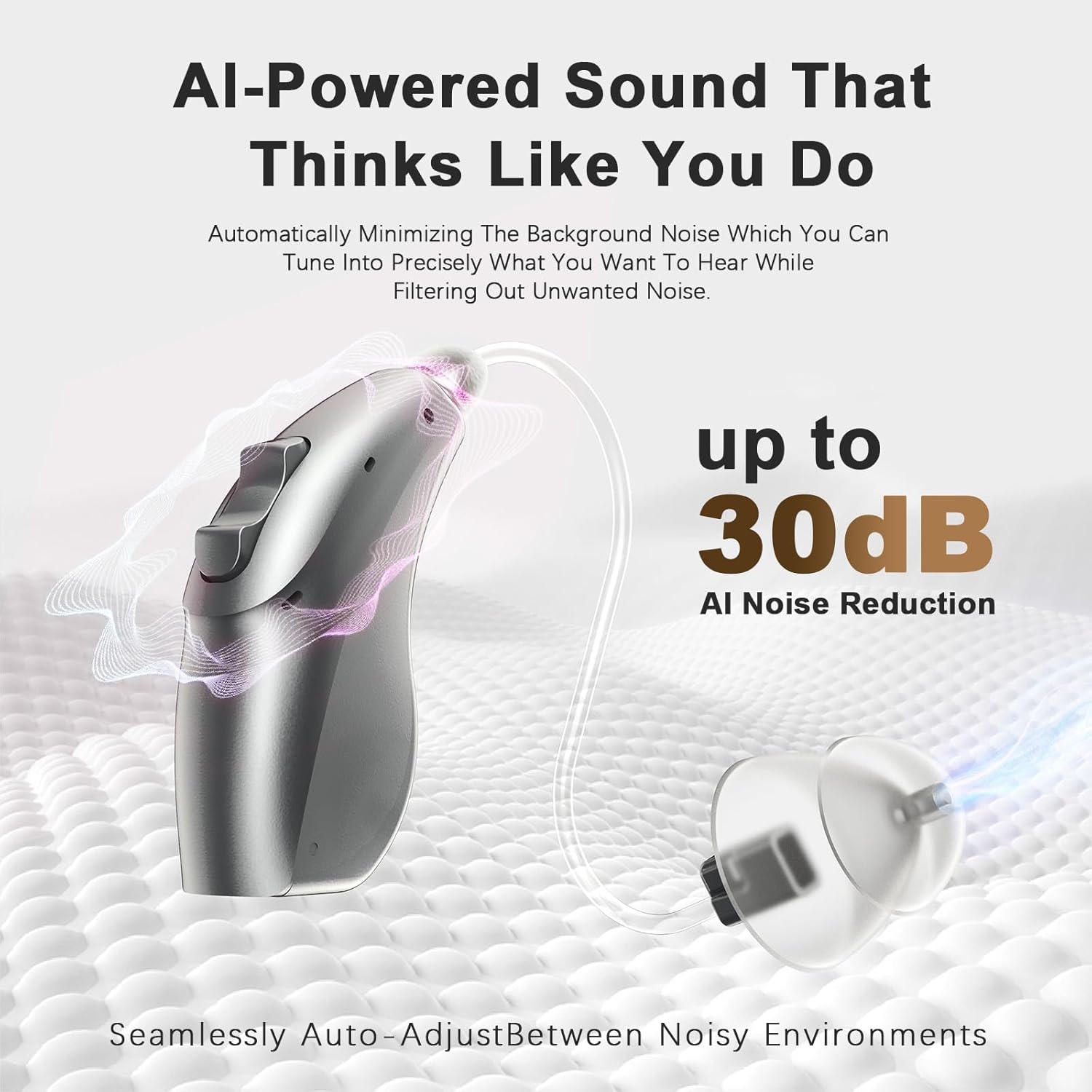
BlaidsX
$399.00
In stock on Amazon
Check price on AmazonDevice-Specific Tradeoffs by Tier
| Device | FDA Category | Approx. Price | App Tuning | Bluetooth | Tier |
|---|---|---|---|---|---|
| Williams Sound PockeTalker | Consumer electronics (PSAP) | ~$150 | No | No | Audien — $88.00 |
| Audien Atom One | Class II OTC medical device | ~$100–$250 | Limited | No | Audien — $88.00 |
| Vivtone Supermini | Class II OTC medical device | ~$300–$500 | Yes | Some models | Williams — $202.00 |
| Oricle | Class II OTC medical device | ~$300–$600 | Yes | Some models | Williams — $202.00 |
| Lexie B3 | Class II OTC medical device | ~$800–$999 | Full app | Yes | BlaidsX — $399.00 |
| BlaidsX | Class II OTC medical device | ~$600–$999 | Full app | Yes | BlaidsX — $399.00 |
Audien Atom One: Reviewers consistently describe this as a genuine starter device — voices become audible where they weren’t before, but tonal naturalness is limited. The feedback that surfaces most often is that speech is louder, not always clearer. For a first-time user wanting proof-of-concept before committing to anything more expensive, that’s a reasonable entry point. For someone whose primary complaint is word discrimination rather than pure volume, it will likely disappoint.
Vivtone Supermini: The seven-level volume adjustment and small canal fit receive consistent praise from owners, particularly users with smaller ear canals who find standard receiver-in-canal (RIC) designs uncomfortable. Aggregated reviews note the device is unobtrusive and reliable for quiet-environment use but struggles in loud, reverberant spaces — a pattern consistent with limited noise-reduction processing.
Oricle: Worth flagging a documented buyer-risk pattern. Across aggregated reviews, a recurring sequence emerges: device fails or underperforms → customer contacts support → support is unresponsive → owner posts a public review → Oricle’s team contacts the reviewer and resolves the issue. The resolution is real. But relying on public escalation to trigger warranty service is a fragile support model. For a purchaser advising a client or family member, setting that expectation upfront is warranted. The device itself reviews reasonably for its price tier; the after-sale process is the variable.
Lexie B3: Beyond the Bose signal processing, the subscription-based support model is the feature that sets it apart from comparable price-tier competitors. Owners get remote audiologist check-ins and app-guided fit adjustments. For someone without easy access to a local audiologist — rural settings, long wait lists — that support structure has real functional value. Wirecutter’s coverage of OTC hearing aids (published by The New York Times) has consistently cited the B3’s support ecosystem as a category differentiator.
BlaidsX: The simultaneous hearing aid plus Bluetooth earbud functionality surfaces in owner reviews as genuinely surprising. Users who commute, work in open offices, or want to stream audio without managing two separate devices describe it as unexpectedly practical. For a younger adult with mild-to-moderate loss who lives in a connected-device environment, this is a differentiator that prescription devices in the $3,000 range do not consistently match.
Decision Rules: The If/Then Framework
If the person has no audiogram and situational complaints only: Start with a PSAP like the PockeTalker. If it helps, you’ve solved the problem affordably. If it doesn’t, you’ve confirmed the loss is complex enough to warrant a formal evaluation.
If there’s a confirmed mild-to-moderate loss and tech comfort is present: The Lexie B3 or BlaidsX tier is the right comparison set. Factor in the support model alongside the hardware. App-based self-fitting works well for some users and is a genuine barrier for others — be honest about which category your advisee falls into.
If the primary need is word clarity in group settings, not volume: Neither PSAPs nor entry OTC aids address this well. This profile needs at minimum a premium OTC aid with directional microphone arrays and noise processing, and more likely needs the prescription pathway with a formal word recognition assessment. ASHA’s public guidance at asha.org outlines the audiological assessment process for complex word discrimination concerns.
If funding is the constraint: The Hearing Loss Association of America tracks state-level funding programs and Medicaid waiver provisions that have begun covering OTC devices following the 2022 FDA rule change, documented in HLAA’s OTC hearing aid resources at hearingloss.org. The landscape continues to evolve; do not default to “hearing aids aren’t covered” without checking current state-specific provisions.
If the person attends venues with hearing loop systems: This is the T-coil question, and it is underserved in the OTC category. Most OTC aids do not include telecoils. For users who regularly attend loop-equipped venues — houses of worship and performing arts spaces increasingly install them — the absence of a T-coil is a genuine functional gap. App-based Bluetooth streaming does not fully substitute for a room-optimized loop signal in large spaces. Prescription aids commonly include T-coils; verify this specification explicitly before purchasing any OTC device for a loop-dependent user.
Frequently Asked Questions
What is the actual difference between a PSAP and an OTC hearing aid? Legally: PSAPs are consumer electronics; OTC hearing aids are FDA-regulated Class II medical devices that cannot legally claim to treat hearing loss. Practically: for some users with mild situational difficulty, the functional difference is small — but only OTC-classified devices qualify for health-related reimbursement pathways.
Can I return an OTC hearing aid if it doesn’t work for my type of hearing loss? Most major retailers offer 30-day return windows on OTC hearing aids, and some OTC brands offer extended trial periods. Always verify the return policy at point of purchase. Consumer Reports has identified return policy transparency as a key variable to check before buying — this is a meaningful consumer protection that prescription aids, typically non-returnable after fitting, do not offer.
Will an OTC hearing aid work for moderate hearing loss, or only mild? The FDA’s OTC category includes mild-to-moderate loss. “Moderate” (roughly 41–55 dB hearing level, per ASHA’s audiogram severity classifications) is within scope. Moderately-severe loss (56–70 dB) is not — that is the prescription boundary.
Do any OTC devices work with a T-coil neckloop for loop-equipped venues? Very few OTC aids include a telecoil. If loop compatibility matters, verify T-coil presence explicitly before purchase — most product pages do not prominently list this specification.
What should I do if an OTC hearing aid stops working and the manufacturer won’t respond? Document everything in writing. Escalate via the retailer’s buyer protection process — credit card chargebacks and retailer intervention often move faster than direct manufacturer warranty claims. File a complaint with the FDA’s MedWatch system for Class II device failures; manufacturers are required to track these reports.
Is the Lexie B3 actually made with Bose technology? The Bose involvement is substantive. Bose developed its own hearing aid line (Bose SoundControl, now discontinued) and the underlying signal processing technology was developed through that program. Lexie licensed that technology for the B3. It is a genuine engineering collaboration, not a co-branding arrangement, though Lexie manufactures and supports the device independently.