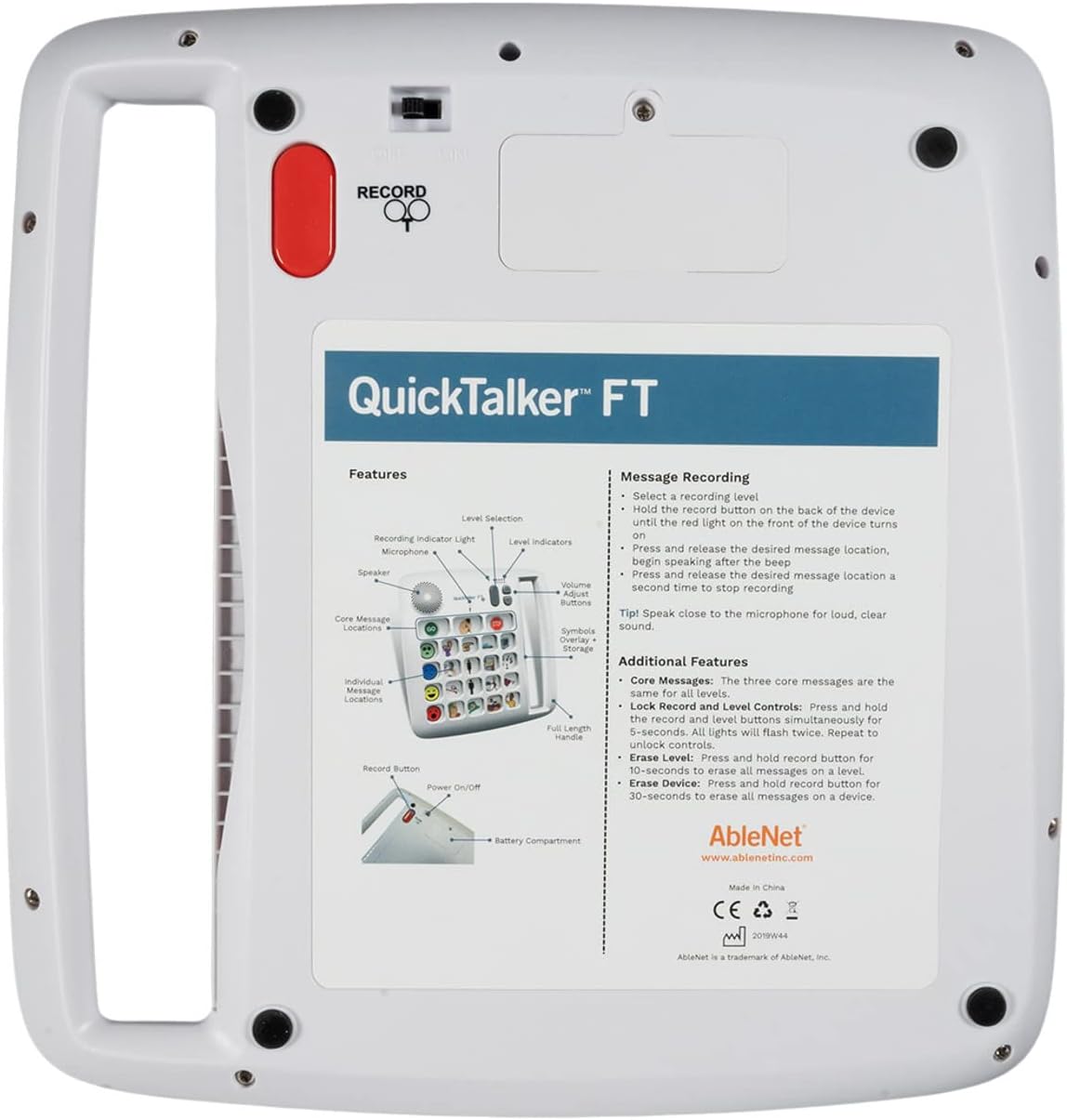
Imagine you’re working with a seven-year-old who has cerebral palsy and reliable access to a single switch — a pressure-sensitive button she activates with her left hand. She communicates her basic wants and needs with facial expression and vocalization, but her family and school team want her to have a dedicated SGD (speech-generating device — a device whose sole purpose is to produce spoken words or phrases on her behalf) that doesn’t require an iPad, an app subscription, or an IT department to maintain. Her OT has flagged three AbleNet devices as candidates: the QuickTalker Freestyle, the iTalk2 with Levels, and the SuperTalker Progressive Communicator. The budget is tight, insurance authorization is pending, and the IEP meeting is in six weeks. Which one do you recommend?
That scenario — or a close cousin of it — is exactly what this guide is built to answer. AbleNet’s low-tech dedicated SGD line occupies the roughly $100–$450 price band and serves users at the earliest stages of AAC, including switch users, single-message communicators, and people building toward more complex symbol-based systems. Each device makes a different bet about how much vocabulary a user needs and how they’ll access it. The decision isn’t just clinical — it touches funding pathways, durability expectations, and transition planning. Let’s break it down.
What These Devices Actually Are (and Aren’t)
Before comparing, it’s worth being honest about the category. AbleNet’s QuickTalker, iTalk2, and SuperTalker are dedicated, digitized-speech SGDs — meaning they play back recorded human speech (not synthesized text-to-speech), they are single-purpose devices (not tablets running AAC software), and they are designed for robustness and simplicity over flexibility.
They are not high-tech AAC devices. They won’t grow with a user who eventually needs a large vocabulary, a robust symbol set, or eye-gaze access. ASHA’s AAC Evidence Maps — published by the American Speech-Language-Hearing Association and available through asha.org — distinguish between digitized-speech devices and robust AAC systems, a distinction that matters for both funding and long-term planning. If your client has even a moderate likelihood of needing 100 or more vocabulary locations within 18 months, you are probably in the wrong product category, and a mid-range device running a system like LAMP Words for Life or Snap Core First belongs in the conversation instead.
That said, for users who need a durable, low-maintenance first communicator; single-switch or direct-touch access; caregiver-recordable messages without software; or a transition device while complex AAC funding is pending — this category is clinically appropriate and practically indispensable. AbleData, the assistive technology database maintained by the Administration for Community Living at abledata.acl.gov, lists AbleNet’s SGD line consistently among the most-referenced digitized-speech devices in school-district procurement records.
The Three Devices: Specs and Decision Signals
The three comparisons below are organized from lowest to highest cost and complexity. Each closes with a tier marker so you can scan quickly for the profile that matches your client.
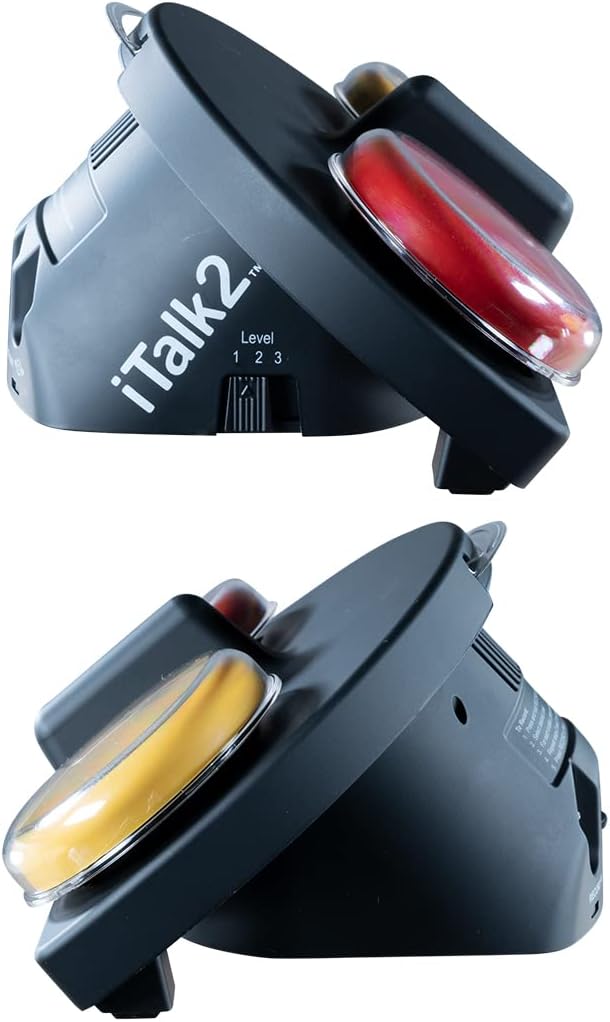
iTalk2 with Levels
The pitch: A two-message, two-switch device with a leveling function that lets you store multiple sets of two messages — think “yes/no,” “more/stop,” “help/done” — and cycle through them. Small, lightweight, and extremely straightforward to program: press record, speak, done.
By the numbers (iTalk2 with Levels, per AbleNet Inc. iTalk2 with Levels product documentation, 2025):
- Message locations: 2 per level, multiple levels available
- Recording time per message: approximately 20 seconds
- Switch access: 2 standard 3.5mm switch jack inputs
- Street price range: approximately $100–$140
Who it fits: Early communicators establishing cause-and-effect with two choices. Also a strong fit for users with significant motor limitations who have reliable access to two switches but not the visual or cognitive bandwidth for more than two options at once. The iTalk2 is frequently prescribed as a transition device — something that goes home while complex device funding is processing — because it is inexpensive enough to be purchased out of pocket or through small discretionary school-district budgets.
Trade-off to name explicitly: Two messages per level is a real ceiling. If your client begins making progress and consistently wants more vocabulary, the iTalk2 has nowhere to grow. You’ll be back at the funding table faster than with either alternative. Factor that into your framing with the family. ATIA — the Assistive Technology Industry Association — emphasized in its 2025 conference proceedings on low-tech AAC implementation that families who understand a device’s temporary role are significantly more likely to pursue robust AAC funding in parallel rather than treating the bridge device as an endpoint.
AbleNet
$215.00
In stock on Amazon
Check price on AmazonSuperTalker Progressive Communicator
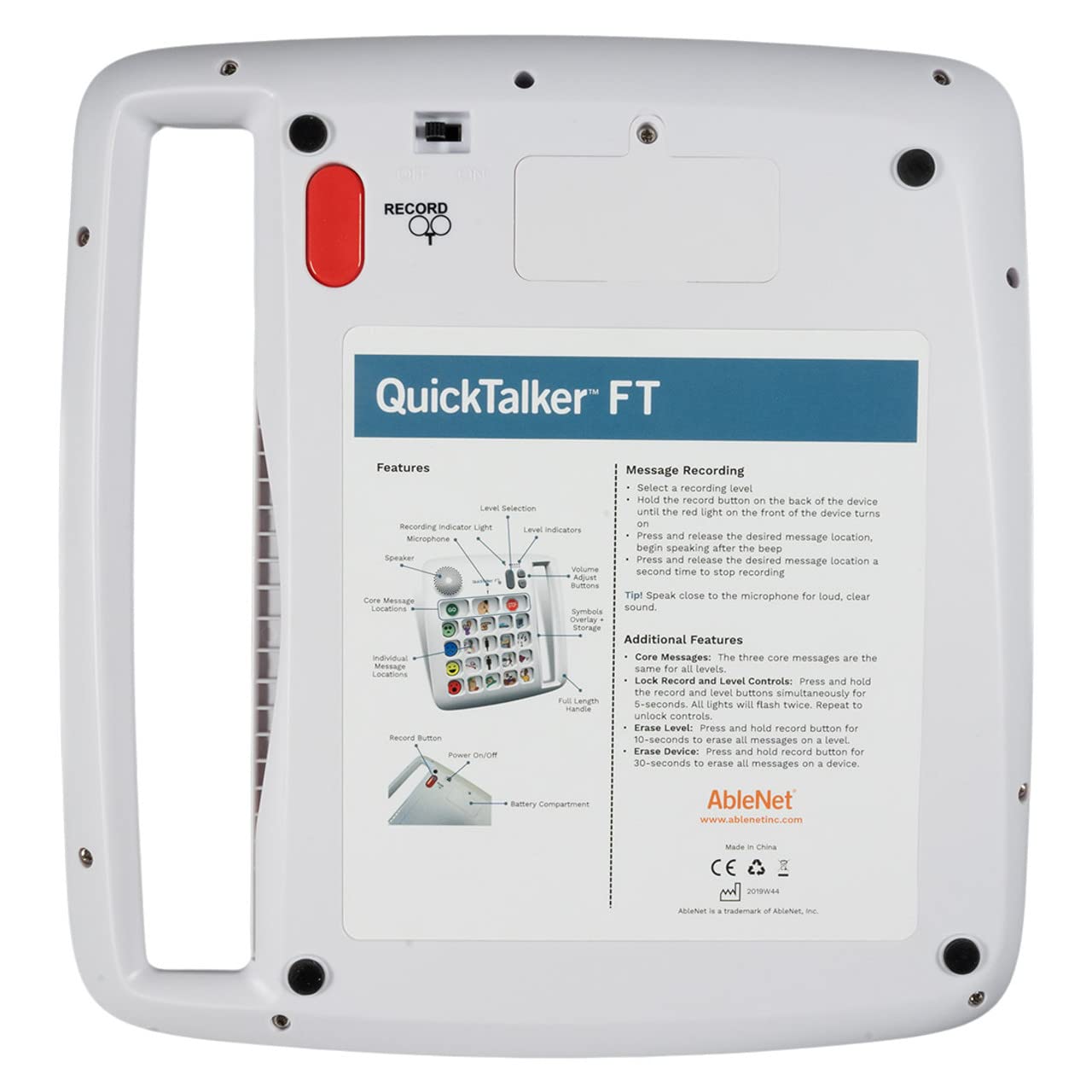
The pitch: The SuperTalker sits between the iTalk2 and the QuickTalker. It offers up to 8 message locations and supports single-switch scanning access — where the device cycles through options and the user activates their switch to select — as well as direct touch and partner-assisted scanning. Its “progressive” design means you can start with 1 or 2 active locations and expand up to 8 as the user’s skills develop.
By the numbers (SuperTalker Progressive Communicator, per AbleNet Inc. SuperTalker Progressive Communicator product documentation, 2025):
- Message locations: 1–8, configurable
- Recording time per message: approximately 12 seconds
- Switch access: 1–2 standard 3.5mm switch jacks; supports single-switch scanning
- Street price range: approximately $200–$280
Who it fits: This is the most nuanced recommendation in the group. The SuperTalker is purpose-built for switch scanning users who are not yet ready for 32 locations but have outgrown binary choice. If your client has a single reliable switch site and is actively working on scanning with their AT team, the SuperTalker’s built-in scanning support makes it clinically superior to both alternatives for that access method. The progressive message count is genuinely useful as well: AbleData (Administration for Community Living, abledata.acl.gov) notes in its SGD device database entries for the AbleNet product line that the SuperTalker is frequently cited by SLPs as a device that requires reconfiguration rather than replacement as the user builds skills.
Trade-off to name explicitly: At 8 locations maximum, the SuperTalker will eventually hit its ceiling for a progressing user — likely within 12 to 24 months of consistent AAC use if things go well. Budget for that transition in your recommendation documentation. Also: single-switch scanning is cognitively demanding for some users. If your client has not had a formal switch access assessment, the SuperTalker’s scanning mode may be premature. The QuickTalker with direct touch might produce more immediate communicative success while switch access training continues in parallel.
AbleNet
$265.00
In stock on Amazon
Check price on AmazonQuickTalker Freestyle
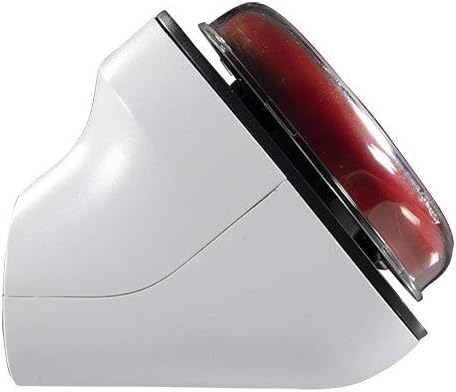
The pitch: The most vocabulary-rich device in this comparison. The QuickTalker Freestyle offers up to 32 recorded messages across multiple pages, with direct-touch symbol overlays. It supports switch access via standard 3.5mm jacks, and its overlay system accommodates a range of symbol sets — PCS, SymbolStix, or custom photographs.
By the numbers (QuickTalker Freestyle, per AbleNet Inc. QuickTalker Freestyle product documentation, 2025):
- Message locations: up to 32 (8-location and 32-location configurations available)
- Recording time per message: approximately 10 seconds
- Switch access: 1–2 switch jack inputs, model-dependent
- Street price range: approximately $280–$450 depending on configuration
Who it fits: Clients who are ready to navigate a multi-location overlay and have some symbolic understanding — meaning they can associate a symbol with a meaning, even if inconsistently. Also the right call when you anticipate needing genuine vocabulary breadth in the near term: requesting, commenting, yes/no, plus some core vocabulary. The Freestyle’s page-leveling function means a caregiver or SLP can expand vocabulary without purchasing new hardware.
Trade-off to name explicitly: The overlay system requires consistent caregiver involvement to keep symbols current and meaningful. If the home environment has limited caregiver capacity for AAC programming, a 32-location device can become a 3-location device in practice. AOTA — the American Occupational Therapy Association — has flagged caregiver burden as a leading predictor of device abandonment in this device class, as discussed in the Assistive Technology Special Interest Section Quarterly, 2024. Match device complexity to caregiver bandwidth, not just to client potential.
AbleNet
$275.00
In stock on Amazon
Check price on AmazonFunding Pathways: What Actually Gets These Devices Paid For
At the $100–$450 price range, these devices typically fall below most Medicaid SGD funding thresholds, which generally apply to devices coded under HCPCS L8000-series and often involve a higher cost floor. That’s important context — and a double-edged sword.
The upside: You generally do not need a full SGD justification and SLP letter-of-medical-necessity for a device in the iTalk2’s price range. Many school districts purchase these devices through AT budgets, classroom supply lines, or discretionary funds without triggering lengthy procurement paperwork. Some states’ Medicaid waivers do cover low-cost digitized-speech devices; check your state’s assistive technology program. Every state has a federally funded AT program under the Assistive Technology Act, and ATIA — the Assistive Technology Industry Association, atia.org — maintains a state program directory that is updated annually.
The downside: Because these devices are inexpensive enough to “just buy,” they are sometimes purchased instead of initiating robust AAC funding — which is a clinical and advocacy failure. ASHA’s AAC Evidence Maps (American Speech-Language-Hearing Association, asha.org) make clear that individuals with complex communication needs often require robust AAC systems, not digitized-speech devices, as their primary long-term communication support. Using a low-cost bridge device to avoid the paperwork burden on a more capable device does the client real harm. Document clearly when a low-tech device is a bridge and when it is clinically appropriate as a long-term support.
For school-district purchasing: All three AbleNet devices are commonly purchased under IDEA assistive technology provisions. The IEP team must consider AT needs; a documented trial of a low-tech device before recommending high-tech AAC is often part of a defensible funding narrative for insurers — but the trial must be documented as a trial, not a destination.
The Decision Rules
If your client has a single reliable switch site and is actively working on scanning access: start with the SuperTalker Progressive Communicator. Its scanning support is the differentiating feature, and the 1-to-8 location progression gives room to grow without new hardware.
If your client is at cause-and-effect stage, working with two switches, and needs a durable, low-cost first communicator or bridge device: the iTalk2 with Levels is the right call. Name it a bridge in writing. Start robust AAC funding paperwork in parallel.
If your client has some symbolic understanding, direct-touch access, and will need genuine vocabulary breadth in the next 6 to 12 months — or if caregivers are highly engaged and willing to manage overlays: the QuickTalker Freestyle earns its higher price point and should be your recommendation.
If none of these devices fits because your client has emerging literacy, strong motor control, or cognitive capacity for 100 or more locations: you are likely shopping in the wrong category. Mid-range dedicated SGDs such as the Accent series from PRC-Saltillo or tablet-based AAC with a robust software system warrant a separate evaluation. The funding pathway is harder, but so is living for years with a device that caps communicative potential.
AbleNet’s low-tech line does one thing well: it gives real voice to people who have very little of it, quickly and affordably. Choosing the right device in this line is less about finding the “best” device and more about being honest about where your client is today, where they are going, and how long this device is supposed to carry them. Do that math clearly, put it in writing, and you’ll be in good shape at the IEP table.