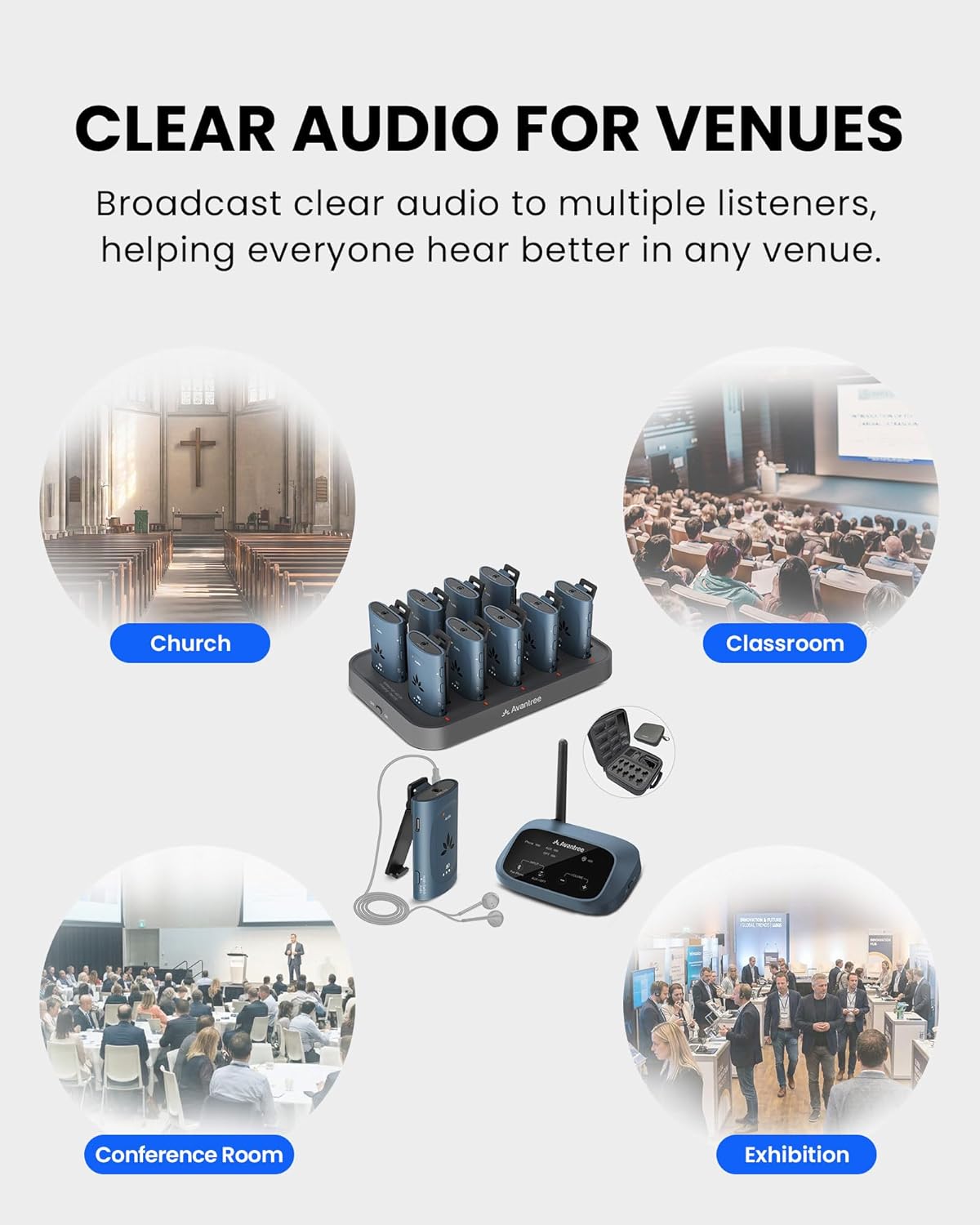
Imagine you’re the volunteer AV coordinator for a 400-seat church. A congregant approaches you after the service: “I turned up my hearing aid as loud as it goes, and I still couldn’t follow the sermon.” You know you’re supposed to have an assistive listening system — you’ve seen the ADA signage requirement — but right now all you have is a single FM transmitter that nobody’s touched in six years. That’s the starting point for most facility managers reading this: a gap between legal obligation and actual capability, and a market that just got more complicated with the arrival of Bluetooth-based Auracast technology.
This article compares the three main categories you’ll actually encounter when pricing a system in 2026: FM (frequency-modulated radio) systems, which broadcast audio wirelessly to dedicated receivers; hearing loop systems (also called induction loops or audio-frequency induction loops, AFIL), which transmit a magnetic signal picked up directly by a hearing aid’s built-in T-coil; and Auracast, a new Bluetooth broadcast standard that streams audio to compatible hearing devices or earbuds without pairing. You’ll get the decision math, the documented tradeoffs, and a plain-English FAQ built from real buyer questions.
The Legal Floor: What ADA Actually Requires
Before comparing products, confirm what you’re legally required to provide. Under the Americans with Disabilities Act Title III Technical Assistance Manual, published by the U.S. Department of Justice, assembly areas with fixed seating must provide assistive listening systems if they have audio amplification. The coverage formula: 4% of total seats, or a minimum of two receivers, whichever is larger. A 200-seat sanctuary needs at least eight receivers. A 500-seat auditorium needs twenty.
The law doesn’t mandate a specific technology — FM, loop, and infrared all satisfy the requirement — but it does mandate that receivers be available, maintained, and that staff know how to distribute them. The Hearing Loss Association of America’s “Assistive Listening Systems” overview at hearingloss.org emphasizes that signage must indicate receiver availability at the entrance and that receivers must be compatible with hearing aids — meaning neckloops for T-coil users must be provided alongside any FM receivers, or the room must have a hearing loop installed.
The American Speech-Language-Hearing Association (ASHA), in its “Hearing Assistive Technology” resource at asha.org, further notes that assistive listening devices are most effective when staff are trained to demonstrate them and when multiple technology types are available simultaneously, since no single system reaches every user’s device configuration.
By the numbers — 200-seat sanctuary baseline:
- Legal minimum: 8 receivers in working condition
- HLAA best-practice recommendation: 10–12 receivers (adds buffer for simultaneous interpreters and damaged units)
- Hearing loop coverage: the entire room counts as “receivers” — no portable hardware to hand out
If your facility is a house of worship with fewer than 50 employees and was built before 1993, different ADA timelines apply — but the practical advice is the same: assume full compliance is expected and plan accordingly.
FM Systems, Hearing Loops, and Auracast: Head-to-Head
FM Systems: The Established Workhorse
FM systems have dominated assistive listening installs for thirty years for a simple reason: they’re reliable, the technology is mature, and the receiver fleet is manageable. A transmitter broadcasts on a dedicated FM frequency (typically 72–76 MHz or 216 MHz in the US, away from commercial radio); users carry a small pocket receiver with earbuds or a neckloop.
Williams Sound is the reference name in this category, and their FM systems are standard in courthouses, places of worship, and conference centers across North America, as documented in Williams Sound’s FM and Loop System Product Documentation. The Listen Technologies LR-3200 receiver has earned recognition among audio professionals for one specific and important reason: it applies noise reduction circuitry that strips out HVAC hum, crowd murmur, and PA system bleed — the environmental noise that makes FM receivers in large reverberant sanctuaries feel like listening through a wall. For facilities where acoustics are a documented problem (stone churches, gymnasiums, multi-purpose halls), that noise-floor advantage is the single most important spec to verify before purchasing any FM receiver.
Tradeoffs to name explicitly:
- Receiver fleet requires inventory management, battery replacement, and a check-out/check-in process. Per Williams Sound’s product documentation, NiMH batteries in high-use receivers typically need replacement every 2–3 years.
- Neckloop compatibility is a documented pain point. A neckloop converts an FM receiver’s audio output into a magnetic signal that a hearing aid T-coil can pick up — but neckloops require correct impedance matching to the receiver, and this is not universal. The decision rule: before purchasing neckloops, call the manufacturer, give them your receiver model number, and get the compatible neckloop confirmed in writing.
- FM is analog and unencrypted. In a healthcare or legal setting, that may matter.
Retekess FM systems occupy a distinct secondary position in this market for one underappreciated reason: their simultaneous interpretation use case. Retekess transmitters support multiple channels, meaning a single transmitter array can send the English sermon on channel 1 and a Spanish interpretation on channel 2. If your congregation is multilingual — and many urban churches are — Retekess may justify itself on interpretation logistics alone, not just hearing assistance.
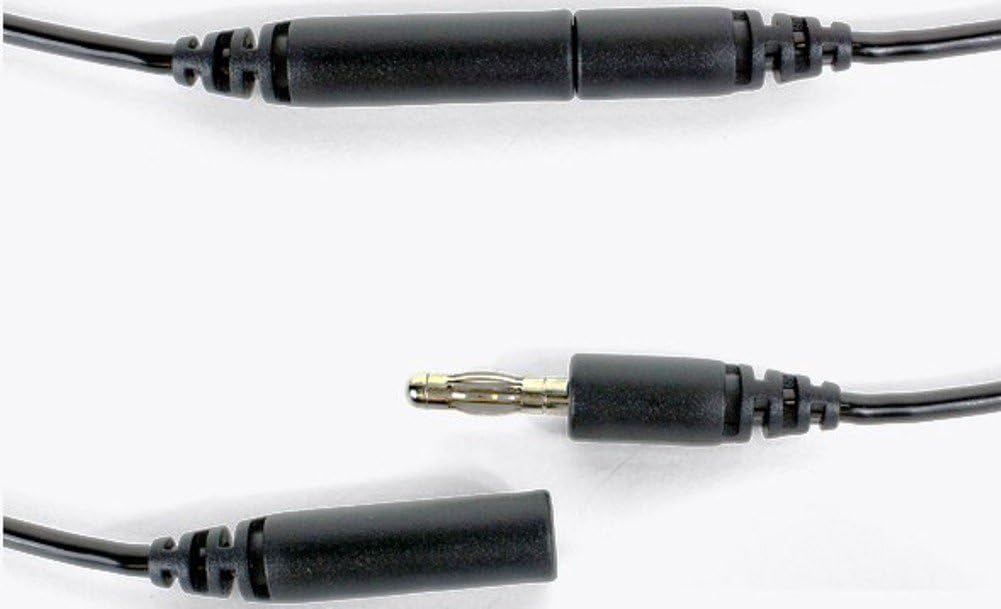
Williams
$61.29
In stock on Amazon
Check price on AmazonHearing Loop Systems: The Premium Infrastructure Play
A hearing loop (induction loop) works by running a wire around the perimeter of a room, connected to an amplifier that draws audio from the PA system. Anyone whose hearing aid has a T-coil (also called telecoil) setting can switch to T-coil mode and receive the audio magnetically — no receiver to check out, no earbuds to fumble with, no stigma of walking up to the usher desk.
Contacta Systems and Williams Sound are the two vendors most commonly specified for professional loop installs in North American houses of worship. Contacta’s “Hearing Loop Installation Guide for Houses of Worship,” available through Contacta Systems directly, is one of the clearest publicly available technical documents in this category and is worth requesting before you meet with any installer.
Counter loops — smaller, self-contained loop pads designed for information desks, reception windows, and ticket counters — are a separate product category. The Williams Sound counter loop is a strong performer in this space. The practical outcome: the loop signal bypasses the room’s acoustic noise entirely, allowing a hard-of-hearing visitor at a service window to follow a group conversation clearly rather than simply receiving amplified but muddy sound. That specific outcome (hearing a group conversation, not just a single voice) is the differentiator that separates counter loops from simply turning up a speaker.
The Hearing Loss Association of America’s assistive listening overview at hearingloss.org notes that hearing loops are the preferred solution for T-coil users specifically because they eliminate the need to manage portable equipment — a meaningful operational advantage for volunteer-run facilities.
Tradeoffs:
- A full perimeter loop for a 200-seat sanctuary runs $1,500–$4,000+ installed, depending on room geometry, flooring material (metal rebar in concrete can cause signal interference), and whether a certified loop installer is required by your jurisdiction. This is not a DIY project for most facilities.
- Hearing loops only serve users whose hearing aids have a T-coil. ASHA’s “Hearing Assistive Technology” resource at asha.org notes that T-coil is standard in most behind-the-ear (BTE) hearing aids but is frequently absent in smaller in-the-canal and completely-in-canal models. You still need a parallel receiver solution for users without T-coil — so a loop alone does not replace an FM fleet.
- Maintenance is lower than FM. No batteries, no inventory. Annual loop field testing to the IEC 60118-4 standard is recommended by Contacta Systems to confirm signal uniformity across the room.
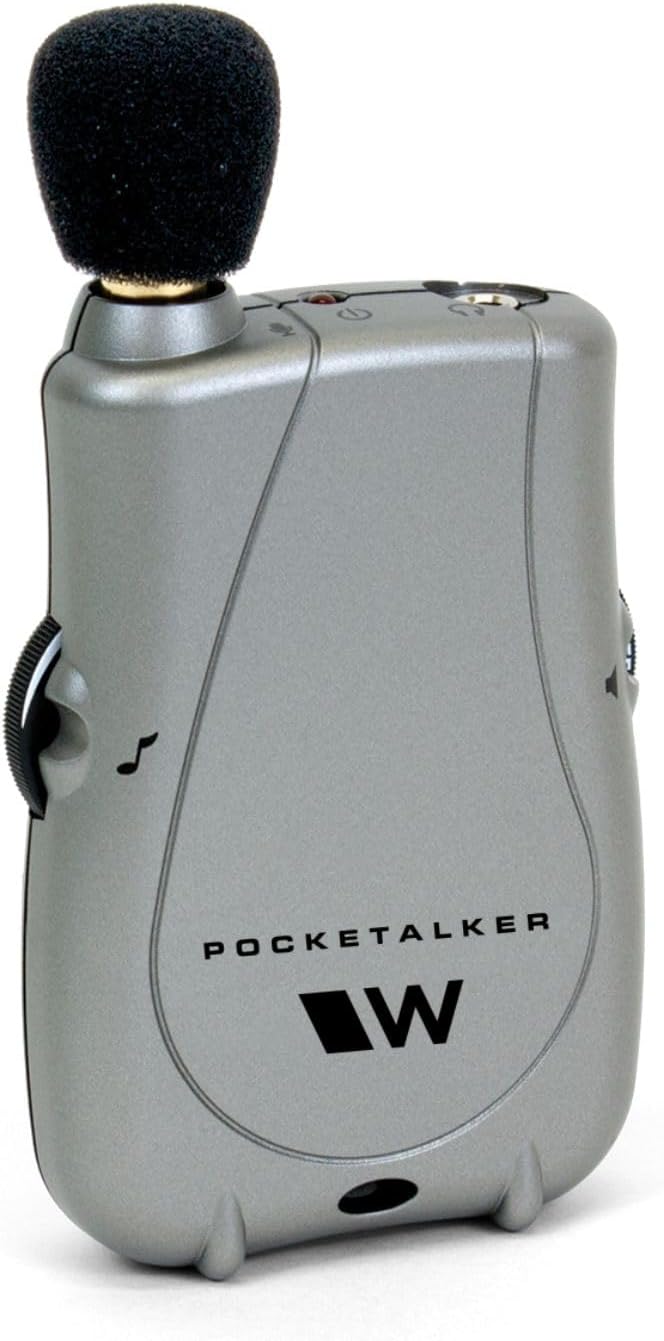
Williams
$202.00
In stock on Amazon
Check price on AmazonAuracast: Real Capability, Immature Packaging
Auracast is the Bluetooth SIG’s broadcast audio standard, finalized in 2022 and entering the market in product form through 2024–2026. According to the Bluetooth SIG’s “Auracast Broadcast Audio” technical specification summary, the core promise is this: a venue installs one Bluetooth transmitter, and any Auracast-compatible hearing aid, cochlear implant processor, or consumer earbud can receive the stream — no check-out, no neckloop, no FM receiver. The specification also supports multiple simultaneous language streams, which mirrors the multilingual use case described above for Retekess FM.
The documented problem at the $599 tier: The most specific and credible complaint pattern across Auracast-branded venue systems in this price range is a missing or incompatible power adapter in the retail package. For a product being unboxed by a volunteer who may not have technical backup, a missing adapter is a facility-down situation. Facility managers evaluating any Auracast transmitter system should verify power supply compatibility and completeness before accepting delivery, and should keep a universal DC adapter on hand rated to the transmitter’s spec.
The bigger Auracast limitation: Auracast does not work with hearing aids that don’t yet support the standard. As of mid-2026, Auracast receiver capability is concentrated in devices released in the last 18–24 months. If your congregation’s average hearing aid age is 4–6 years — which is realistic given the cost of hearing aids and typical replacement cycles — many members won’t be able to use an Auracast-only system. The decision rule here is clear: Auracast is a supplement to FM or loop through at least 2028, not a replacement.
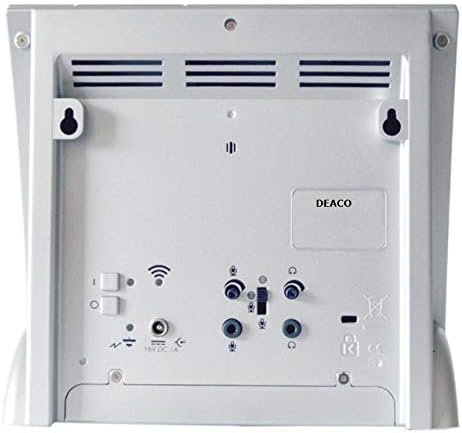
Williams
$420.00
In stock on Amazon
Check price on AmazonDecision Framework: If X, Then Y
| Your situation | Recommended direction |
|---|---|
| Need ADA compliance fast, limited budget | FM system (Williams Sound or Retekess) + neckloop inventory |
| Multilingual congregation, simultaneous interpretation needed | Retekess FM (multi-channel) |
| High T-coil adoption, willing to invest in infrastructure | Full perimeter hearing loop (Contacta or Williams Sound) |
| Reception desk, ticket window, or small counter application | Williams Sound counter loop |
| Future-proofing, congregation skewing younger, want no receiver fleet | Plan Auracast as 2027–2028 primary; keep FM in parallel now |
| Noisy acoustic environment (stone, gymnasium) | Prioritize FM receivers with active noise reduction (Listen Technologies LR-3200) |
Frequently Asked Questions
Does our church need an assistive listening system by law, and what counts as compliant? If your facility has fixed seating and amplified audio and is covered under ADA Title III, yes. The ADA Title III Technical Assistance Manual (U.S. Department of Justice) requires functioning receivers available for at least 4% of seats, staff trained to distribute them, and entrance signage. FM, loop, and infrared all satisfy the technology requirement. A hearing loop satisfies the requirement without portable receivers, provided neckloop receivers are also available for users without T-coil.
Will the Auracast system work with hearing aids that don’t yet support Auracast? No. Auracast requires the receiving device to support the standard. Hearing aids purchased before roughly 2024–2025 generally do not. Budget for parallel FM or neckloop access for the majority of your congregation until Auracast penetration increases.
How many receivers do we need for a 200-seat sanctuary? Legal minimum is 8. The Hearing Loss Association of America’s practical recommendation is 10–12 to account for battery failures, lost units, and days when demand spikes. Budget for neckloop-style receivers as a subset of that total.
Can a T-coil neckloop be used with any hearing aid that has a T-coil setting, or only specific brands? T-coil is a universal standard, so in theory any T-coil hearing aid should work with any neckloop. In practice, incompatibilities between specific neckloops and specific FM receivers do occur due to output impedance mismatch. Confirm compatibility with the manufacturer before ordering, using your specific receiver model number.
What is the maintenance burden of an FM receiver fleet compared to a hearing loop? FM requires ongoing battery replacement, inventory tracking, periodic receiver testing, and neckloop cable replacement. A hearing loop requires annual field uniformity testing and no portable inventory. For facilities with high volunteer turnover, the loop’s lower ongoing burden is a significant operational advantage, as noted by both Contacta Systems’ installation documentation and HLAA’s assistive listening guidance.
Is Auracast ready to replace FM systems now, or should we wait? Wait. The Bluetooth SIG’s Auracast specification is technically sound, but device penetration in the hearing aid population is too low in 2026 to rely on it as a primary system. Plan a hybrid approach: maintain or upgrade your FM infrastructure now, and design your next major AV refresh (likely 2028–2030) around Auracast as the primary channel.