Imagine your mother’s audiologist just fitted her with new behind-the-ear hearing aids, but the TV in her living room is still a daily battle — dialogue muddy, volume wars with family members, remote always just out of reach. Or picture yourself as the SLP on the IEP team trying to explain to a school district why a small-room hearing loop makes more sense than four personal FM receivers when the budget is already stretched. In both cases, you’re dealing with the same underlying technology question: what’s the most reliable way to get amplified, low-distortion sound to someone who has hearing loss, in a space smaller than a concert hall?
This article compares the three main categories — hearing loop amplifiers (which broadcast a magnetic signal that compatible hearing aids pick up wirelessly through a built-in component called a T-coil), neckloops (wired or wireless loops worn around the neck that generate that same magnetic field for the wearer’s hearing aids), and personal FM systems (radio-frequency transmitter-receiver pairs that deliver amplified audio directly through a wired earpiece or headphones). Each solves a real problem. Each has a failure mode that the marketing copy won’t tell you about. Let’s get into the specifics.
| EDITOR'S PICKWilliams Sound PLA 90 Counter L… | Mid-tierWilliams Sound PockeTalker Ultr… | Budget pickWilliams Sound NKL 001 Neckloop… | |
|---|---|---|---|
| Device type | Counter loop | Personal amp | Neckloop |
| T-Coil needed | ✓ | — | ✓ |
| Built-in mic | ✓ | — | — |
| Cord length | — | — | 18 in |
| Intended user | Venue/room | Individual | Individual |
| Headphones | — | ✓ | — |
| Price | $420.00 | $202.00 | $61.29 |
| See on Amazon → | See on Amazon → | See on Amazon → |
The T-Coil Compatibility Problem Is Not a Footnote — It’s a Deal-Breaker Pre-Step
Before you evaluate any loop product — room amplifier or neckloop — you must confirm two things in sequence: (1) the hearing aid has a T-coil, and (2) that T-coil is activated in the device’s programming. This sounds obvious, but the Hearing Loss Association of America’s document “Hearing Loop Technology Overview” notes that a significant portion of hearing aids sold in the United States include a T-coil that is never activated at the fitting appointment, because activating it requires allocating a program slot and taking time to explain the feature.
The real-world consequence shows up in buyer experience with neckloop products. A common scenario: a caregiver confirms with an audiologist that T-coil mode is correctly set, yet the neckloop still fails to work reliably. What happened? Most likely one of three things: the hearing aid’s T-coil sensitivity was set too low for the weak field generated by a neckloop (versus a room loop), the aids were programmed to T-coil but reverted to microphone mode due to an automatic environment-sensing algorithm, or the neckloop’s output was below the IEC 60118-4 standard that well-calibrated room loops meet.
The practitioner’s pre-purchase protocol:
- Ask the person’s audiologist — in writing — to confirm T-coil is activated AND that automatic program-switching is disabled for the T-coil program.
- Ask whether the aids have “auto T-coil” (switches automatically in a magnetic field) or require manual program selection. Auto mode can misfire.
- Borrow or demo the neckloop before purchasing if at all possible. The American Speech-Language-Hearing Association’s guidance document “Hearing Assistive Technology” recommends trial periods as standard of care for assistive listening device fittings.
- Note the hearing aid brand. Some brands’ T-coil sensitivity settings are locked to factory defaults and require firmware access to change — a question for the fitting audiologist, not the device retailer.
This verification step applies to every neckloop and room loop purchase. Skip it and you may be troubleshooting a compatibility failure that has nothing to do with the loop product itself.
How the Three Technologies Compare
Room Loop Amplifiers
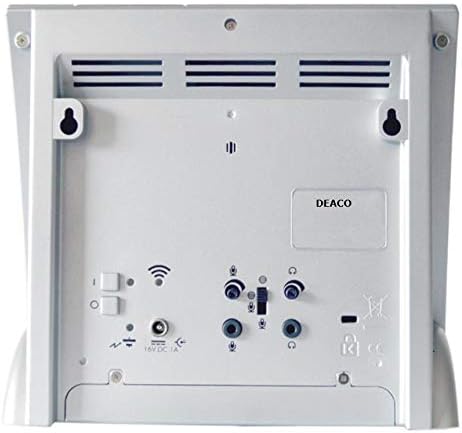
A small-room hearing loop amplifier takes an audio signal — from a TV, a microphone, a streaming device — and drives current through a loop of wire installed around the perimeter of a room. Anyone wearing a T-coil-enabled hearing aid or cochlear implant processor with T-coil who steps inside that loop hears the audio directly through their device, without background noise added.
When it works, it’s elegant. No receiver to carry, no earpiece to fit, no batteries to swap. ABLEDATA’s assistive listening devices product category consistently describes loop systems as the preferred solution for fixed listening environments precisely because of this seamless user experience.
When it doesn’t work, the failure is maddening and hard to diagnose. User reports of certain small-room home loop amplifiers describe completely inconsistent performance: the system works perfectly one day, delivers unusable audio the next, with no identifiable cause. This is a real pattern, not an outlier. Home installations without professional commissioning — meaning, without someone measuring the magnetic field strength across the room with a calibrated loop listener — have no baseline to return to when something changes. Field strength can be affected by wiring in walls, metal structural elements, nearby electronics, and even furniture position. Without a measurement baseline, troubleshooting is guesswork.
Best for: Owner-occupants who can arrange a one-time professional calibration visit. Poor fit for rentals, older buildings with heavy metal framing, or situations where T-coil status is unconfirmed.
Williams
$420.00
In stock on Amazon
Check price on AmazonNeckloops: The T-Coil Bridge for Portable Listening
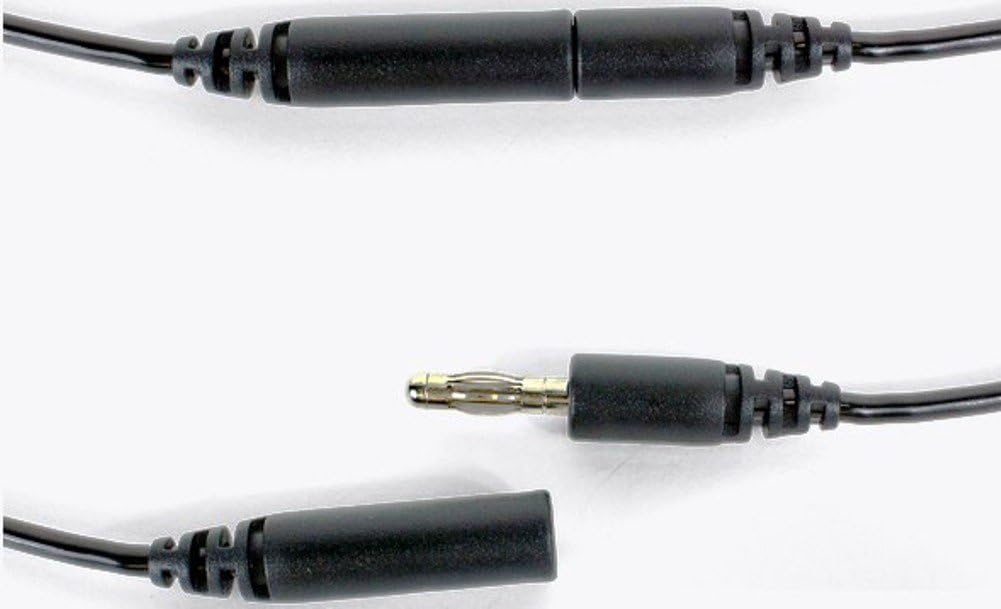
A neckloop worn under or over clothing generates the same magnetic field as a room loop, but only for the wearer. It pairs with an FM receiver, a smartphone, a TV streamer, or any device with a 3.5mm audio output. Done correctly, it’s nearly invisible and preserves the hearing aid as the primary listening device — no separate earpiece required.
The practical ceiling here is magnetic field strength. Neckloops generate a weaker field than room loops, which means the T-coil compatibility and sensitivity settings discussed above matter even more. The Hearing Loss Association of America’s document “Assistive Listening Devices” describes neckloops as effective when properly matched to a hearing aid’s T-coil program, but cautions that performance varies significantly by brand and model.
This approach is also the current-technology bridge to what Auracast Bluetooth broadcast promises to deliver in future years: the listener’s hearing aids handle final sound processing, no visible earpiece, no separate receiver visible to others in the room. The difference is that FM-plus-neckloop works right now with existing hearing aids.
Best for: Listeners with confirmed, calibrated T-coil programs who want a discreet, portable assistive listening solution for church, home TV, or small groups. Not recommended when T-coil compatibility is unverified.
Williams
$202.00
In stock on Amazon
Check price on AmazonPersonal FM Amplifiers: The No-Compatibility-Risk Option
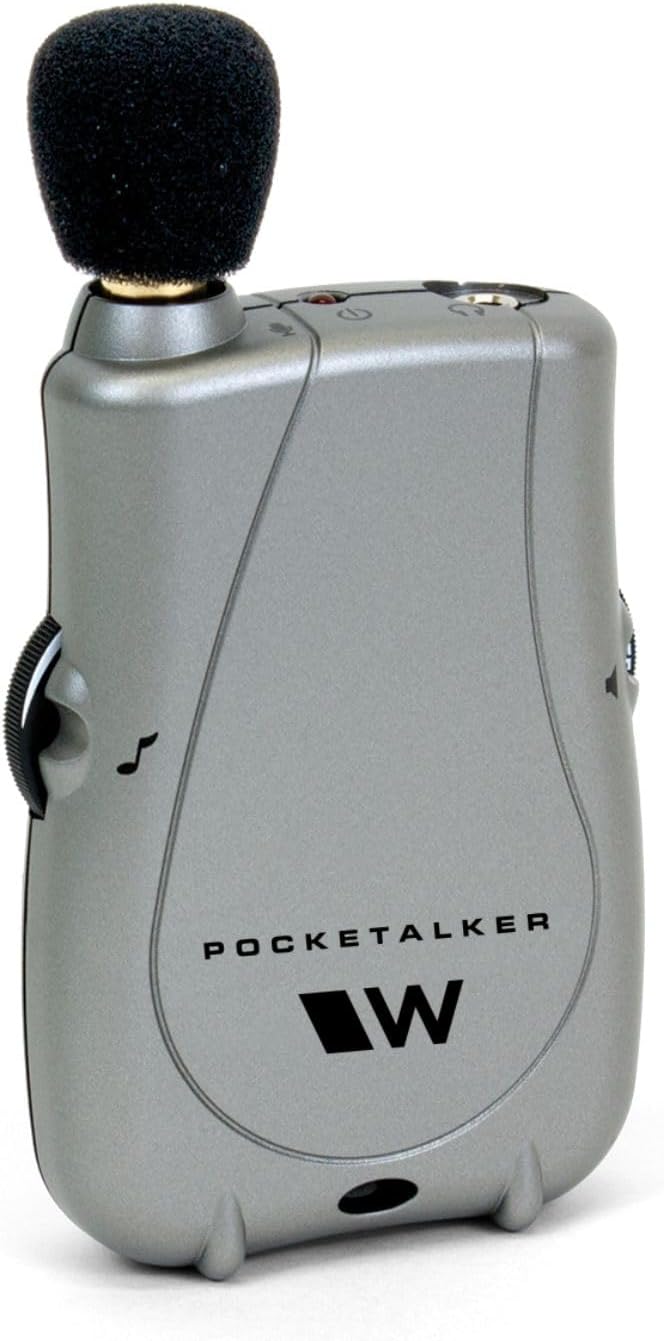
The Williams Sound Pocketalker is the most widely recognized product in this category and is often positioned — by audiologists and by its own marketing — as a transitional device for people not yet ready for hearing aids, or as a low-cost backup. That framing misses something important.
Experienced users with premium hearing aids report preferring the Pocketalker’s sound quality for specific listening tasks, particularly TV viewing and one-on-one conversation in quiet home environments. The Hearing Loss Association of America’s “Assistive Listening Devices” guidance explains why: the Pocketalker’s amplification chain is straightforward — microphone, amplifier, wired earphone — with no digital signal processing unless you’re using the Pro version. For some listeners whose hearing aids apply heavy compression or noise reduction algorithms optimized for outdoor or mixed environments, the Pocketalker’s relatively unprocessed output is perceptually cleaner in a quiet room.
Critically, it requires no T-coil. No audiologist appointment. No compatibility check. The device works immediately, with the included earphone or neckloop accessory, regardless of the listener’s hearing aid brand or programming status.
Best for: Listeners without T-coil-enabled aids, listeners whose aids apply aggressive processing that harms quiet-environment audio quality, and any situation where immediate deployment without compatibility troubleshooting is the priority.
Williams
$61.29
In stock on Amazon
Check price on AmazonBy the Numbers: Cost and Setup Complexity
| Technology | Typical home cost (2026) | Setup complexity | T-coil required |
|---|---|---|---|
| Small-room loop amplifier | $150–$400 + installation | Moderate–High | Yes |
| Neckloop (wired, with FM receiver) | $200–$400 total | Low–Moderate | Yes |
| Personal FM amplifier (Pocketalker-style) | $150–$300 | Very Low | No |
Installation cost for a professionally commissioned room loop varies by room size and local market, but a single-room residential installation with field strength measurement typically adds $150–$400 to equipment cost. That cost is non-recoverable if the listener moves or if the installation is found to underperform due to building materials.
FM Systems for Church, Small Group, and Home: The Hidden Neckloop Approach
There’s a specific FM receiver use case that deserves more attention in home and small-group contexts: pairing an FM receiver with a neckloop worn discreetly under clothing, so the listener’s hearing aids pick up the signal via T-coil without a visible earpiece. When T-coil compatibility has been properly verified, users in church settings and small group environments consistently describe this as a clean, effective solution.
For a school district or faith community weighing assistive listening investment, the FM-plus-neckloop approach at roughly $200–$400 per listener position (transmitter shared, one receiver per person) competes directly with room loop installation costs — and sidesteps the calibration and metal-interference problems that room loops encounter in older buildings with steel framing or rebar-reinforced concrete. The American Speech-Language-Hearing Association’s “Hearing Assistive Technology” guidance identifies FM systems as an appropriate solution for both classroom and community listening environments, and the neckloop pairing extends their utility to T-coil hearing aid users without requiring a separate earpiece.
Safety Case Study: Hearing Aid Retention During Medical Procedures
One use case that is systematically underrepresented in standard product descriptions: hearing aid clip lanyards as a medical equipment retention solution. Clinicians and caregivers have documented near-loss incidents during medical procedures in which oxygen tubing or nasal cannulas, when removed, catch behind-the-ear hearing aids and pull them from the ear. In a hospital bed with loose bedding and limited patient mobility, a dislodged hearing aid is easily lost — at a replacement cost of $1,000–$4,000 or more depending on the device.
A clip lanyard anchored to the patient’s gown prevents the aid from being lost in bedding or on the floor. These accessories are typically priced under $20 and are compatible with most behind-the-ear models.
This matters for practitioners because:
- Patients with reduced mobility or cognitive changes may not be able to communicate that their aid has been dislodged.
- Families and care coordinators should add lanyard clips to the standard intake checklist for any inpatient stay.
- Inspecting the clip connection monthly and replacing the lanyard if any looseness develops is the appropriate maintenance protocol.
ABLEDATA’s assistive listening devices product category includes hearing aid retention accessories in its listings, reflecting their recognition as functional assistive equipment rather than optional accessories.
Frequently Asked Questions
How do I know if my hearing aid has a T-coil, and how do I get it activated? Look up your hearing aid’s model on the manufacturer’s website — most list T-coil as a specification — or ask your audiologist directly. Brands including Phonak, Oticon, Widex, Signia, and Starkey offer T-coils in most mid-range and premium models, but not all entry-level aids include one. Activation requires a programming appointment; the audiologist enables the T-coil program in the fitting software and allocates a manual program slot for it.
Will a neckloop work with any hearing aid brand? T-coil is a standardized technology, so in principle any T-coil-enabled aid should respond to any neckloop. In practice, T-coil sensitivity varies by brand and model, and neckloops generate a weaker magnetic field than room loops. Confirm compatibility before purchasing, and ask your audiologist whether T-coil sensitivity gain is adjustable for your specific aid — this single setting significantly affects neckloop performance.
Can the Pocketalker replace a hearing aid for watching TV at home? For a quiet home environment with the listener positioned near the TV, the Pocketalker delivers clear, useful amplification. It cannot replicate what a hearing aid does in terms of frequency shaping matched to your specific audiogram, and it does not address speech understanding in background noise the way modern hearing aids do. But for the specific task of TV watching at home, experienced users report it can be surprisingly effective, and for someone not yet using hearing aids, it is a meaningful accessibility tool rather than a stopgap.
Why does my hearing loop amplifier work some days and not others? The most common culprits are interference from nearby electronics not running on the good days, automatic program-switching on the hearing aid moving away from T-coil mode, or minor movement of the loop wire changing field distribution. Without a professional installation baseline measurement, diagnosis is difficult. If the system was never professionally commissioned, have a certified loop installer measure field strength across the room — that measurement is the foundation for any useful troubleshooting.
The Decision Rule
- If T-coil is confirmed active and the listener is in a fixed room they own: invest in a professionally installed room loop. Daily-use convenience justifies setup cost. Williams — $420.00
- If the listener needs portable, discreet listening and T-coil compatibility is verified: FM receiver plus neckloop. Proven, deployable today, lower cost than full room installation. Williams — $202.00
- If T-coil status is uncertain, setup support is unavailable, or immediate deployment is required: personal FM amplifier (Pocketalker or equivalent). No compatibility risk, works immediately. Williams — $61.29
- If a small group or faith community needs assistive listening without room loop installation: FM receiver plus neckloop, after confirming T-coil compatibility per the pre-purchase protocol above.
- If an inpatient medical stay is coming up: add hearing aid clip lanyards to the pre-admission checklist. Low cost, high consequence if skipped.