Imagine you’re sitting in a noisy hospital waiting room, straining to understand the receptionist behind a thick glass partition. Your hearing aids are doing their best, but they’re amplifying the HVAC hum and the crying toddler two rows over just as aggressively as the voice you actually need. A colleague mentions that a neckloop would fix this instantly — but you’ve never touched one, and neither has your client. That gap between “feature exists” and “feature configured and working” is where a lot of people get stuck, and it costs real quality of life every single day.
A telecoil (almost always called a T-coil) is a small copper coil built into most hearing aids and cochlear implant processors. When activated, it picks up magnetic signals directly instead of using its microphone — which means it cuts environmental noise almost entirely and delivers a clean audio signal straight to the listener’s ear. The two most practical ways to feed a signal into that T-coil outside of a permanently installed hearing loop are neckloops (a loop of wire worn around the neck that generates the magnetic field) and personal FM receivers (small radio receivers that pick up a transmitted audio signal and then drive a neckloop or earphone). This article maps the decision between those two approaches, prices the relevant hardware honestly, and tells you when each one is the right call.
| EDITOR'S PICK[Williams Sound PockeTalker Ultr](https://www.amazon.com/dp/B003IQN8WA?tag=greenflower20-20)… | Mid-tier[Listen Technologies LR-3200](https://www.amazon.com/dp/B086XHX79M?tag=greenflower20-20) Int… | Budget pick[Williams Sound NKL 001 Neckloop](https://www.amazon.com/dp/B0051PN3E4?tag=greenflower20-20)… | |
|---|---|---|---|
| Type | Amplifier | Receiver | Neckloop |
| Connectivity | Headphone/Earbud | — | T-coil |
| Compatibility | — | — | Hearing aids w/ T-coil |
| Cable length | — | — | 18" |
| Plug type | — | — | Mono |
| Frequency | — | 72MHz | — |
| Price | $202.00 | $127.98 | $61.29 |
| See on Amazon → | See on Amazon → | See on Amazon → |
Why the T-Coil Is Underused — and Why That Matters Clinically
The Hearing Loss Association of America’s T-Coil and Loop Technology FAQ estimates that roughly 70% of hearing aids sold in the United States include a telecoil, yet a significant portion of users have never had it activated. Part of that is fitting-appointment time pressure. Part of it is that audiologists don’t always know whether a client’s daily environments include loop infrastructure. And part of it is that the accessory ecosystem — neckloops, FM transmitters, Bluetooth intermediaries — feels fragmented and confusing to recommend without a clear framework.
For the SLP or AT specialist advising a client, the practical upside is significant. Per ASHA’s Hearing Assistive Technology Systems technical report, FM and loop systems consistently show better signal-to-noise ratios than unaided hearing aids in reverberant spaces — the improvement is often cited as equivalent to moving the speaker to within six inches of the listener’s ear, regardless of actual room distance. That’s not a marginal gain. For a client with moderate-to-severe loss navigating a classroom, an IEP meeting, or a medical appointment, it’s the difference between comprehension and exhaustion.
By the numbers:
- Typical personal FM receiver + neckloop bundle: $150 – $500
- Entry-level standalone neckloop (no FM, Bluetooth-driven): $25 – $80
- Installed hearing loop system for a single room: $1,500 – $8,000+
- T-coil activation at fitting appointment: usually $0 (already in the device)
The cost-benefit case for spending $150–$300 on personal FM before committing to a room loop installation is strong, especially when you’re still assessing how frequently a client will use a given space.
Neckloops: The Simpler Path When the Signal Is Already There
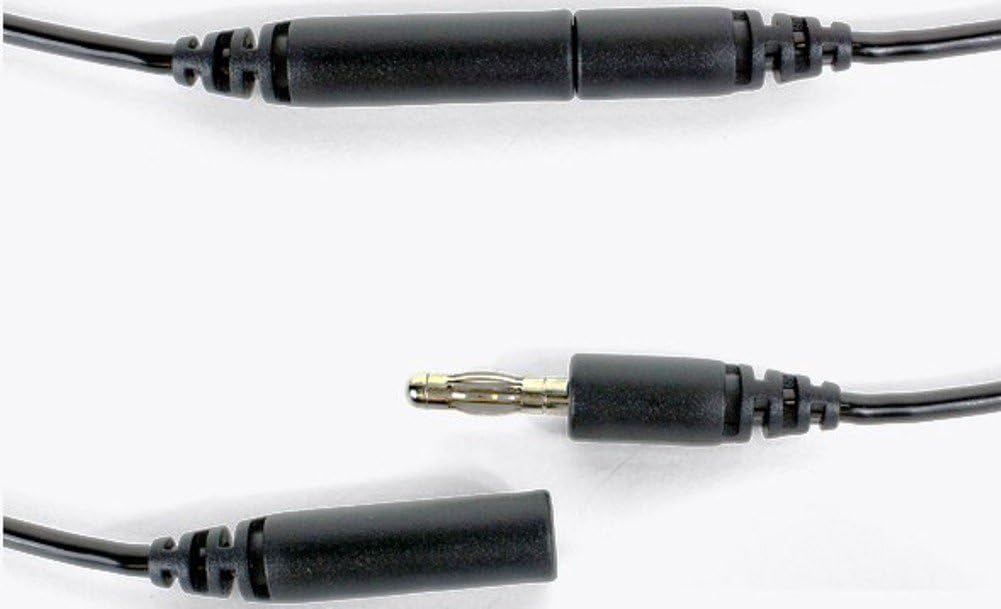
A neckloop is the low-infrastructure option. The device is literally a loop of wire — worn like a lanyard — that connects to an audio source (a phone’s headphone jack, a TV adapter, a Bluetooth receiver) and converts that audio into a magnetic field. The hearing aid’s T-coil picks up that field. No FM licensing, no transmitter placement, no radio frequency coordination.
When neckloops make the most sense:
- One-to-one or small-group settings where the audio source is within a couple of meters (phone calls, tablet-based AAC output, direct TV/stereo connection).
- Clients who are already using Bluetooth streaming via an intermediary device — many of those intermediaries (Phonak Roger, Starkey SurfLink, Oticon ConnectClip) can also drive a neckloop output for legacy hearing aids without Bluetooth.
- Budget-constrained situations where you need something working this week. Neckloops in the $25–$50 range are reviewed across aggregated hearing technology forums as functional for basic use, though owners consistently report that build quality and signal strength vary considerably at the low end.
The tradeoff to name explicitly: Neckloops have a transmission range limited by the loop diameter — roughly the wearer’s own neck. If the audio source is across a conference table or at the front of a classroom, a neckloop alone doesn’t solve the distance problem. You’ve cleaned up the delivery path but not addressed the source-to-listener gap. That’s the moment FM becomes the right conversation.
Personal FM Systems: Solving the Distance Problem
Personal FM systems separate the signal pickup from the listener. A small microphone/transmitter worn by the speaker (or placed near an audio source) broadcasts on a dedicated FM frequency; the listener’s receiver picks up that signal and routes it to the hearing aid — typically through a neckloop, a direct audio input (DAI) boot, or a Bluetooth bridge.
The dominant names in this space — Williams Sound, Phonak Roger, and Bellman & Symfon — occupy meaningfully different market positions.
Williams Sound PockeTalker and FM systems are the entry point many SLPs reach for first. The PockeTalker is technically an amplifier rather than an FM system, but Williams Sound’s FM lineup (the Pocketalker Ultra and their DW and FM series receivers) is widely used in educational and clinical settings. Published specs show their FM receivers operating in the 72–76 MHz range (legacy) or 216 MHz range depending on model — important to confirm before purchase because legacy frequencies face interference issues in some metro areas. Owners in long-run clinical reviews note solid reliability and straightforward operation, which matters when a client needs to hand the transmitter to a stranger at a medical appointment.
Phonak Roger — specifically the Roger Pen, Roger Select, and Roger On — operates on a proprietary 2.4 GHz digital protocol rather than analog FM, which sidesteps frequency interference issues entirely. The tradeoff: you’re inside a proprietary ecosystem. The receiver hardware (Roger X, Roger MyLink) adds cost, and compatibility with non-Phonak hearing aids requires the Roger MyLink neckloop receiver, pushing the full system cost to roughly $600–$900 depending on configuration. For clients who already wear Phonak Marvel or Lumity aids, the integration is seamless and the performance reviews are consistently strong. For everyone else, factor in that neckloop intermediary cost and the lock-in implications before recommending.
Bellman & Symfon is less marketed in the US but well-regarded in Scandinavian AT markets. Their Visit FM system is frequently cited in European AT assessments as a strong option for clients who need a simpler two-piece system without app dependency. US availability is limited but not zero — worth knowing for clients who have trialed it through international contacts or Canadian programs.
The FM tradeoff matrix:
| Scenario | Better Fit |
|---|---|
| Client needs classroom/conference room coverage | Personal FM (transmitter at source) |
| Client needs phone/TV audio cleaned up at home | Neckloop + Bluetooth adapter |
| Budget under $200, T-coil already activated | Entry neckloop to start |
| Client wears Phonak aids | Roger ecosystem (strong case) |
| Client wears other brand aids, needs cross-room | Williams Sound FM + neckloop receiver |
| Institutional room-level solution justified | Installed hearing loop (separate article) |
Funding and Authorization: What to Know Before You Write the Recommendation
This is where the recommendation letter matters as much as the spec comparison. Per the Gallaudet University Technology Access Program’s FM Systems for Adults consumer guide, personal FM systems used in educational settings are frequently fundable under IDEA (Individuals with Disabilities Education Act) when the IEP team documents the functional listening need. For adults, Vocational Rehabilitation (VR) funding is the most consistent pathway — particularly when the system is tied to employment accommodation.
Private insurance rarely covers personal FM as a standalone item, but the FCC’s Hearing Aid Compatibility Requirements create a compliance hook: employers and facilities that serve the public may have ADA-based obligations to provide effective communication access, which can shift the cost off the individual entirely in some workplace or public accommodation scenarios. The HLAA’s Hearing Loop Systems consumer documentation addresses this angle specifically — worth citing in recommendation letters when the client is being told to self-fund.
Medicaid coverage varies by state and by whether the device is framed as a hearing aid accessory (more likely covered in some states) versus a standalone assistive device. If a client is already receiving state AT program services, loop-and-FM systems sometimes fall under the umbrella of funded “assistive listening devices” — a category distinct from hearing aids in many state program definitions, which can work in the client’s favor.
For practitioners writing funding justification letters: document the specific environments where comprehension breaks down, the signal-to-noise conditions, and the T-coil activation status of the existing hearing aids. The functional access argument is stronger than the technology argument in almost every funding context.
The Decision Rule
If you’re currently advising a client and need a decision framework:
If the hearing aids have an activated T-coil and the problem is a one-to-one or home-media context → Start with a neckloop and a Bluetooth audio receiver. Cost is under $150, setup is same-day, and the gain is immediate. Escalate from there only if the neckloop doesn’t solve it.
If the problem is a group or classroom environment where the speaker is more than two meters away → Personal FM is the right category. Match transmitter to the specific environment (clip-on mic for one speaker, table mic for group), and verify the hearing aid’s T-coil is activated and compatible with the neckloop-style receiver you’re specifying.
If the client wears Phonak aids and is willing to invest $600–$900 → The Roger ecosystem resolves both the distance problem and the neckloop intermediary in one package and is the recommendation most audiologists and SLPs land on for Phonak users with active communication demands.
If the client’s hearing aids don’t have a T-coil, or it can’t be activated → The neckloop/FM path is blocked at the hardware level. That’s the moment to loop in the audiologist about whether the current aids are meeting needs, or to assess whether a direct audio input or Bluetooth streaming solution bypasses the T-coil requirement entirely.
The T-coil is one of the most underleveraged features in the hearing aid market. For the practitioner who knows it’s there and knows how to activate it, it’s also one of the highest-value, lowest-cost interventions available — often measurably improving comprehension without touching the fitting or the prescription. That’s worth building into every hearing aid consultation.